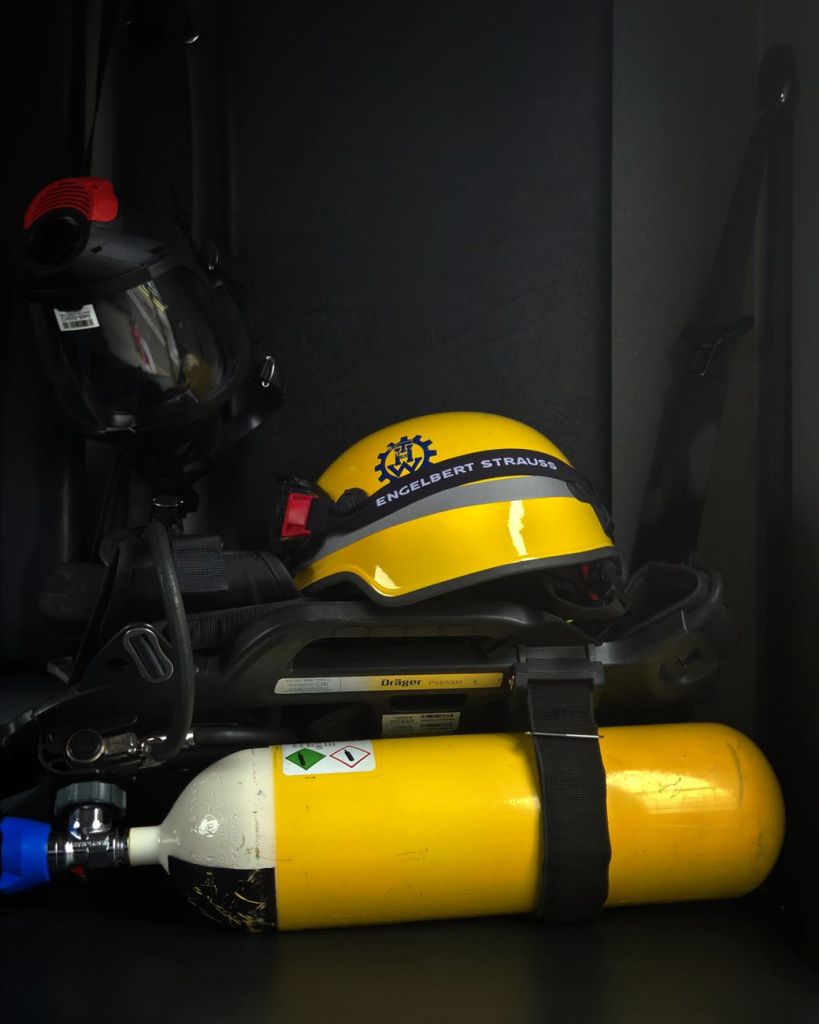
Sixteen years ago this month, much of the world held its breath as, one by one, 33 men rose out of the earth in Chile’s Atacama Desert. They had been trapped deep underground for 69 days. Their rescue on October 13, 2010, remains one of the most hopeful stories of our time, a story of patience, teamwork, ingenuity and faith.
The day the mountain closed
On August 5, 2010, a cave-in struck the San José copper and gold mine near the city of Copiapó in northern Chile. Thirty-three workers were trapped about 700 meters underground, roughly 2,300 feet. One other worker escaped.
The trapped men gathered in a small emergency refuge. Their shift foreman, Luis Urzúa, organized the group and their very limited supplies. Above ground, no one knew whether anyone was still alive.
A note on a drill bit
For 17 long days, rescuers drilled narrow holes deep into the rock, hoping to find the men. Families gathered at the mine. Their camp, with its shrines, became known as Campamento Esperanza, “Camp Hope.” They prayed constantly.
On August 22, a drill bit came back to the surface with a handwritten note taped to it: “Estamos bien en el refugio los 33,” which means, “We are well in the shelter, the 33.” The news spread across Chile and around the world. They were alive.
Seven weeks of waiting
Finding the men was only the beginning. Getting them out would take weeks. Through narrow tubes nicknamed palomas, or “doves,” rescuers sent down food, water, medicine and letters from home.
Underground, the miners kept order and kept hope. One of them, Mario Gómez, set up a small chapel, and another, José Henríquez, led daily prayers. Above them, three separate drilling teams worked at the same time, each trying a different method to bore a hole wide enough for a person. On October 9, the drill known as “Plan B” broke through first.
The Phoenix rises
To bring the men up, Chile’s navy shipbuilder, ASMAR, built a narrow steel capsule with design help from NASA engineers. It was called the Fénix, the Spanish word for Phoenix, the bird that rises from the ashes. The capsule was about 21 inches wide, with oxygen, communication links and health monitors inside. Each trip up the shaft took roughly 10 to 15 minutes.
The rescue began on the evening of October 12. Shortly after midnight on October 13, Florencio Ávalos became the first miner to reach the surface. Through that day, the men came up one at a time to cheers, tears and embraces. Chile’s president, Sebastián Piñera, was there to greet them. At about 9:55 that night, the last man rose into the open air: Luis Urzúa, the foreman who had kept his crew together from the very first day.
All 33 came home.
Lessons from 700 meters down
- Hope needs a plan. The families prayed, and the rescuers drilled. Faith and hard work went hand in hand.
- Leadership means going last. Luis Urzúa organized his men in the dark and waited until every one of them was safe.
- Try more than one way. Three drilling plans ran side by side. When you face a big problem, it is wise to keep more than one door open.
- No one gets through alone. Engineers, miners, families, a navy shipyard and experts from other countries all worked together.
Many of the miners and their families spoke openly of their faith. Their cry from the depths echoes one of the oldest prayers in Scripture.
“Out of the depths have I cried unto thee, O LORD.”
Psalm 130:1 (KJV)
Maybe you feel buried under something today: grief, debt, illness or fear. The story of the 33 reminds us that no place is too deep for God to reach. Keep praying, keep working and keep holding on. Help may already be drilling toward you.
Do you remember watching the Chilean miners’ rescue in 2010? Where were you, and how did it make you feel? Share your memories in the comments.
Sources: Encyclopaedia Britannica, “Chile mine rescue of 2010”; Wikipedia, “2010 Copiapó mining accident” (accessed October 22, 2026); Smithsonian Magazine, “The Capsule That Saved the Chilean Miners”; King James Bible, Psalm 130:1.


Leave a Reply