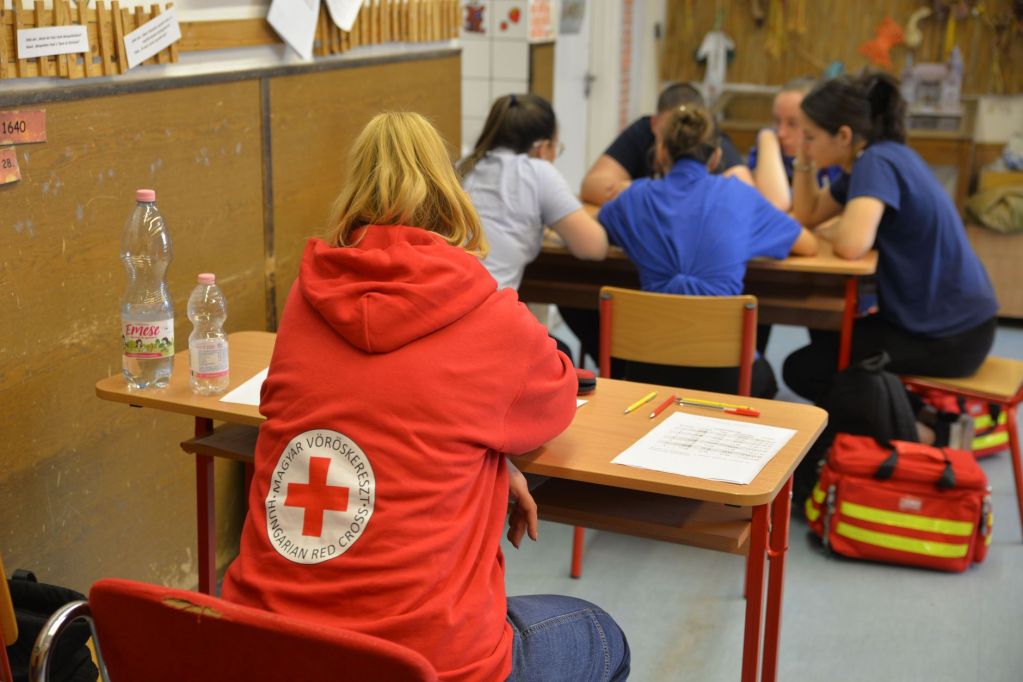
On a hot June evening in 1859, a Swiss businessman named Henry Dunant rode into the Italian countryside hoping to settle a business matter. Instead he walked into one of the bloodiest scenes of his century. What he did next, and what he wrote afterward, gave the world one of its most recognized symbols of mercy: a red cross on a white background.
This week marks the anniversary of the Geneva conference of October 26 to 29, 1863, where that symbol was born. The story behind it is a reminder that one ordinary person, moved by compassion, can change how the whole world treats its suffering.
The battle that changed a businessman
Dunant was born in Geneva on May 8, 1828, into a religious, civic-minded family. On June 24, 1859, the armies of France and Piedmont-Sardinia, led by Napoleon III and Victor Emmanuel II, clashed with Austria near the village of Solferino in northern Italy. Historians estimate that tens of thousands of men were killed or wounded in a single day.
The wounded were carried into the nearby town of Castiglione. There were far too few doctors, too little water and almost no organized care. Dunant did not look away. He stayed and helped tend the injured, organizing whatever help he could find.
“Tutti fratelli”: all brothers
He was not alone. The women of Castiglione came to nurse the wounded alongside him, and they cared for soldiers from both sides. According to the International Committee of the Red Cross’s own journal, they cried “Tutti fratelli,” meaning “all brothers.” The Red Cross still points to that moment as the heart of its story: care given to every wounded person, no matter which uniform he wore.
“But a certain Samaritan, as he journeyed, came where he was: and when he saw him, he had compassion on him,”
Luke 10:33 (KJV)
A book that would not let Europe forget
Back home, Dunant could not shake what he had seen. In 1862 he published A Memory of Solferino (sometimes translated A Souvenir of Solferino). In it he described the suffering plainly and asked a bold question: why not form trained volunteer relief societies in every nation, ready before war comes?
The book stirred readers across Europe. On February 7, 1863, the Geneva Society for Public Welfare formed a committee of five, including Dunant as its secretary, to study his idea. That small group became the beginning of the International Committee of the Red Cross.
Four days in Geneva
From October 26 to 29, 1863, 39 delegates from 16 nations met in Geneva. They agreed to support national relief societies and adopted a simple emblem for those who cared for the wounded: a red cross on a white background. The first national society was founded in Württemberg, in what is now Germany, that November.
Less than a year later, on August 22, 1864, twelve nations signed the first Geneva Convention. It promised that medical workers and the wounded would be treated as neutral and protected. That same year, during the war between Prussia and Denmark, Red Cross delegates went to both sides of the front for the first time.
From poverty to the first Nobel Peace Prize
Dunant’s own life took a hard turn. His business failed and he went bankrupt in 1867. He left Geneva and for many years lived in poverty and obscurity. Eventually he settled in the small Swiss village of Heiden. In 1890 a village teacher, Wilhelm Sonderegger, recognized him, and from 1892 Dunant lived in a room at the Heiden hospital.
The world had not forgotten his idea, even when it forgot the man. In 1901 Henry Dunant shared the very first Nobel Peace Prize with Frédéric Passy. He died in Heiden on October 30, 1910.
The idea also crossed the ocean. Clara Barton, who had nursed soldiers in the American Civil War, founded the American Red Cross on May 21, 1881, and led it for 23 years.
Lessons for our families today
- Do not look away. Dunant changed history because he stopped and stayed when it would have been easier to keep riding.
- Everyone is somebody’s brother. The women of Castiglione cared for enemies and friends alike. Kindness that only serves “our side” is too small.
- Write it down and speak up. Dunant’s book turned one man’s grief into a movement. Our stories of what we have seen can move others to act.
- Your worth is not your bank account. Dunant lost his fortune, yet his life’s work was honored with the first Nobel Peace Prize.
- Be ready before the storm. His big idea was preparation: trained helpers ready before disaster strikes. Families can do the same by learning first aid or volunteering locally.
The red cross you see on an ambulance or at a blood drive is more than a logo. It is a promise that started in a crowded little town in Italy, where ordinary people decided that every wounded stranger was family.
Who is a “Good Samaritan” who stopped to help you or your family when you needed it most? Share your story in the comments.
Sources: International Committee of the Red Cross, “Founding and early years of the ICRC (1863-1914)” (Dec 2017, updated Nov 2020); NobelPrize.org, “Henry Dunant – Biographical”; International Review of the Red Cross No. 212, “Voluntarism within the Red Cross”; Britannica, “Battle of Solferino”; American Red Cross, “Our History”; King James Bible, Luke 10:33.




Leave a Reply