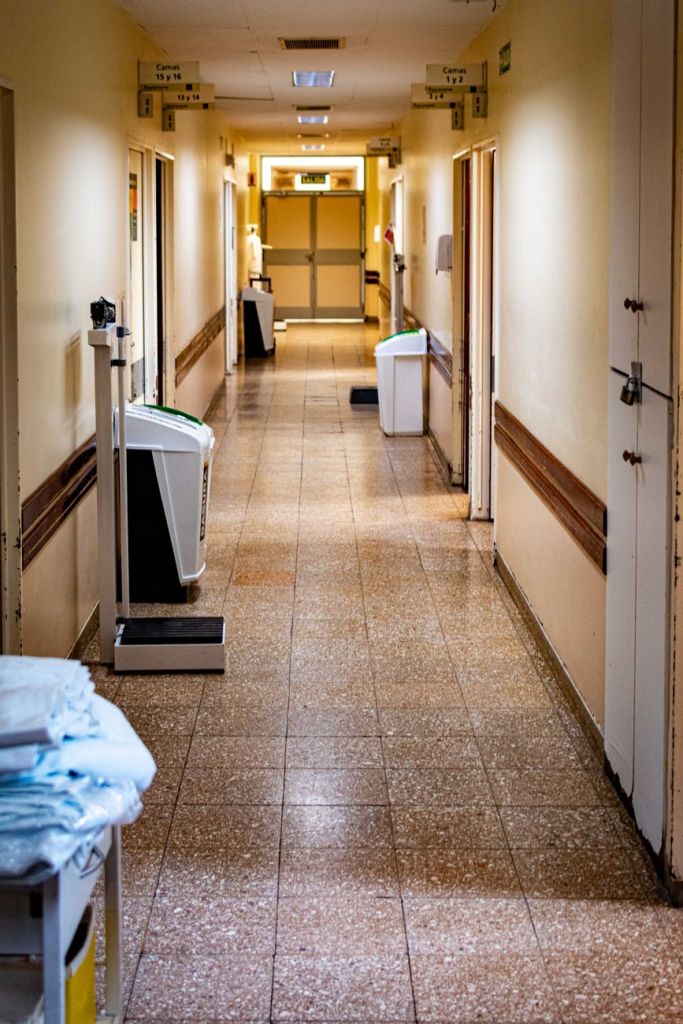
On a Saturday afternoon in early December 1967, an ordinary errand in Cape Town, South Africa, turned into heartbreak. A family was crossing the road near a bakery in the suburb of Observatory when a passing car struck them. The mother died at the scene. Her 25-year-old daughter, Denise Darvall, was rushed to nearby Groote Schuur Hospital with injuries so severe that doctors could not save her.
In the hours that followed, one grieving father made a decision that would change medicine forever.
A Father’s Gift
Doctors asked Edward Darvall whether he would allow his daughter’s organs to be donated. According to the Western Cape Government’s account, he did not hesitate. He agreed to give her heart and her kidneys. Britain’s Science Museum notes that he made the choice in about four minutes, telling the doctors, “If you can’t save my daughter, you must try and save this man.”
The man he meant was Louis Washkansky, a 53-year-old grocer and businessman from Sea Point. After several heart attacks, his heart was failing and he had little time left. When doctors explained the risky, never-before-tried surgery, he chose to take the chance.
The Night at Groote Schuur
The operation was led by Professor Christiaan Barnard, head of cardiothoracic surgery at Groote Schuur and a graduate of the University of Cape Town. He did not work alone. His team included cardiologists led by Professor Velva Schrire, anaesthetists, nurses, immunologists, pathologists, blood transfusion experts and technicians.
Surgery began shortly after midnight. Just before 6 a.m. on Sunday, December 3, 1967, the new heart began to beat in Louis Washkansky’s chest. It was the world’s first human-to-human heart transplant, and within hours, the eyes of the world turned to Groote Schuur Hospital.
Eighteen Days
Washkansky lived for 18 days after the operation. The medicines that kept his body from rejecting the new heart also weakened his immune system, and he died of pneumonia. Yet doctors noted something remarkable: the donated heart kept beating strongly until the end.
Those 18 days were not a failure. They proved that such an operation could be done. Barnard’s second patient, a dentist named Philip Blaiberg, lived about 18 months after his transplant. Later patients lived much longer. Dirk van Zyl, who received a new heart at Groote Schuur in 1971 at age 45, lived another 23 years and became one of the longest-surviving heart recipients of his time. From the late 1970s onward, newer anti-rejection medicines helped transplants become far more successful around the world.
Today, the operating theatre where it all happened has been turned into a museum honoring the medical pioneers, the first recipient and the first donor, Denise Darvall.
Why This Story Still Matters
We often remember famous surgeons, and Dr. Barnard and his team deserve to be remembered for their skill and courage. But this story began with a family in the worst moment of their lives. Edward Darvall had just lost his wife and his daughter. In that darkness, he chose to let something good come from his loss.
That kind of generosity still saves lives every day. According to the U.S. government’s official site, organdonor.gov, more than 100,000 people are on the national transplant waiting list, and about 12 people die each day waiting for an organ. More than 49,000 transplants were performed in the United States in 2025, and a single donor can save up to eight lives.
“A new heart also will I give you, and a new spirit will I put within you: and I will take away the stony heart out of your flesh, and I will give you an heart of flesh.”
— Ezekiel 36:26 (KJV)
That promise is about the spiritual renewal only God can give. Still, the story of December 3, 1967, is a beautiful picture of how one family’s love can bring new life to a stranger.
A Lesson for Families Today
- Talk about it before a crisis. Families like the Darvalls often have to decide in minutes. A calm conversation around the kitchen table can make your wishes clear and lift a heavy burden from loved ones.
- Learn how donation works where you live. Rules differ from country to country. In the United States, you can learn more and register through the official site, organdonor.gov. In other countries, look for your national health service’s official donor registry.
- Ask your questions. Your doctor, pastor or official health sources can help you understand donation in light of your faith and your family’s values.
- Honor donor families. Behind every transplant is someone’s grief. Pray for donor families and for patients still waiting.
Courage showed up in many forms that night in Cape Town: a dying man willing to try, a team willing to attempt the unknown, and a heartbroken father willing to give. Through every storm, we rise together.
Has your family ever talked about organ donation, and what helped you have that conversation?
Sources: University of Cape Town Faculty of Health Sciences, “Sequence of Events”; Western Cape Government, “Transplanting Life – the Story of Chris Barnard”; History.com, “First human heart transplant” (This Day in History, December 3); Science Museum Blog, “Fifty years of human heart transplants” (November 30, 2017); Heart of Cape Town Museum, “Dirk van Zyl”; HRSA, organdonor.gov, “Organ Donation Statistics” (reviewed August 2026).



Leave a Reply