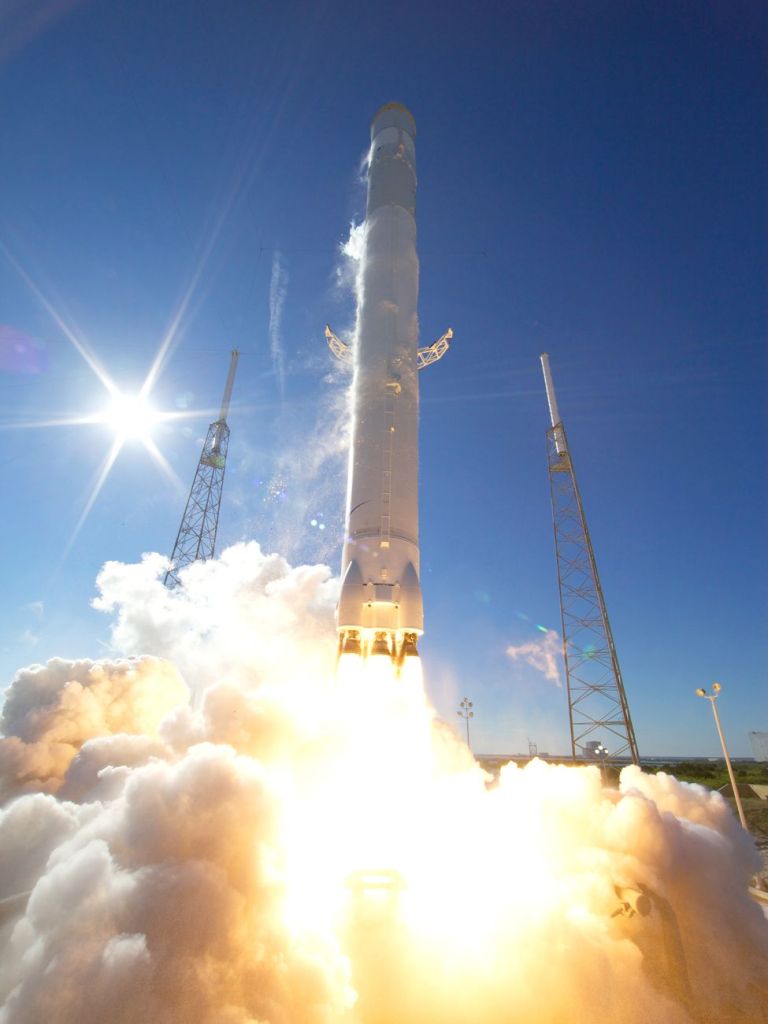
Before sunrise on October 20, 2026, at 4:41 in the morning local time, a rocket lit up the sky over Tanegashima, a small island in southern Japan. On top of Japan’s H3 rocket sat a spacecraft called MMX, short for Martian Moons eXploration. Its goal is bold: travel to Mars, visit its little moon Phobos, scoop up a handful of soil and bring it all the way back to Earth.
About 71 minutes after liftoff, the spacecraft separated from the rocket right on schedule and began its long journey. For Japan’s space agency, JAXA, and for scientists around the world, it was a joyful morning.
A mission of many firsts
If everything goes to plan, MMX will be the first spacecraft to orbit Phobos, the first to collect samples from its surface and the first to return to Earth from the Mars system. Here is the journey, as planned today:
- August 2027: arrive at Mars after about 10 months of travel.
- About three years at Mars: map Phobos, choose landing sites and touch down twice to collect about 10 grams of material, roughly a third of an ounce.
- Late 2028 or early 2029: release Idefix, a small four-wheeled rover built by France and Germany, onto the surface of Phobos.
- Final months: fly past Mars’s other moon, Deimos.
- November 2030: leave Mars for home.
- 2031: drop the sample capsule in the Australian desert.
Space missions often change course, so these dates may shift. But the plan shows remarkable patience: about five years from launch to landing, all for a small handful of dust.
MMX is led by Japan, working with partners from the United States, France, Germany and Europe. It is a good picture of nations working side by side for something bigger than any one of them.
Why a little moon matters
Phobos is only about 14 miles across, lumpy and oblong instead of round. Deimos is even smaller, about 8 miles across. Scientists still don’t know where these moons came from. Some think they are asteroids that Mars captured long ago. Others think a giant crash threw debris into space that later clumped together into moons. A real sample, studied in labs on Earth, could help answer the question and teach us more about the early history of our solar system.
It is also not the first try. Russia’s Phobos-Grunt mission launched in 2011 but never made it out of Earth’s orbit. Hard things often take more than one attempt.
Built on a story of never giving up
Japan has done something like this before, and the story behind it is one of the great comeback tales of space history.
In May 2003, Japan launched a small spacecraft named Hayabusa to an asteroid called Itokawa. Almost everything that could go wrong seemed to go wrong. A solar flare damaged its solar cells and weakened its engines, delaying its arrival. In 2005, two of its stabilizing wheels failed. In December 2005, the team lost contact with the spacecraft completely.
They did not give up. Over the following months, from January to March 2006, engineers patiently restored communication, step by step. Later, in 2009, one of its engines stopped working, and the team kept finding ways forward. Finally, on June 13, 2010, Hayabusa’s capsule floated down by parachute into the South Australian desert, carrying tiny grains of the asteroid, the first sample ever returned from the surface of a near-Earth asteroid.
The engineers who rescued Hayabusa teach us something every family needs. Broken parts and lost signals do not have to be the end of the story. Patience, teamwork and steady hope can carry a mission home.
Looking up with wonder
When we watch a rocket rise or read about a moon of Mars, it is natural to feel small. But the vastness of the heavens points us to Someone greater still.
“The heavens declare the glory of God; and the firmament sheweth his handywork.”
Psalm 19:1 (KJV)
Tonight, step outside with your children or grandchildren and look up. If Mars is visible where you live, point out that red dot and tell them that, right now, a spacecraft from Japan is on its way there. Talk about the God who made it all and the gift of curiosity He placed in every one of us.
Do you remember the first time space made you stop and wonder? Share your story in the comments!
Sources: Space.com, “Japan launches historic MMX sample-return mission to Mars’ moon Phobos” (October 2026); European Space Agency, “MMX lifts off to Mars’s moon Phobos” (October 2026); Good News Network, “Japan launches first mission to return samples from Mars’ moons” (October 21, 2026); Wikipedia, “Hayabusa” (accessed October 22, 2026); NASA Science, “Hayabusa” (accessed October 22, 2026); King James Bible, Psalm 19:1.




Leave a Reply