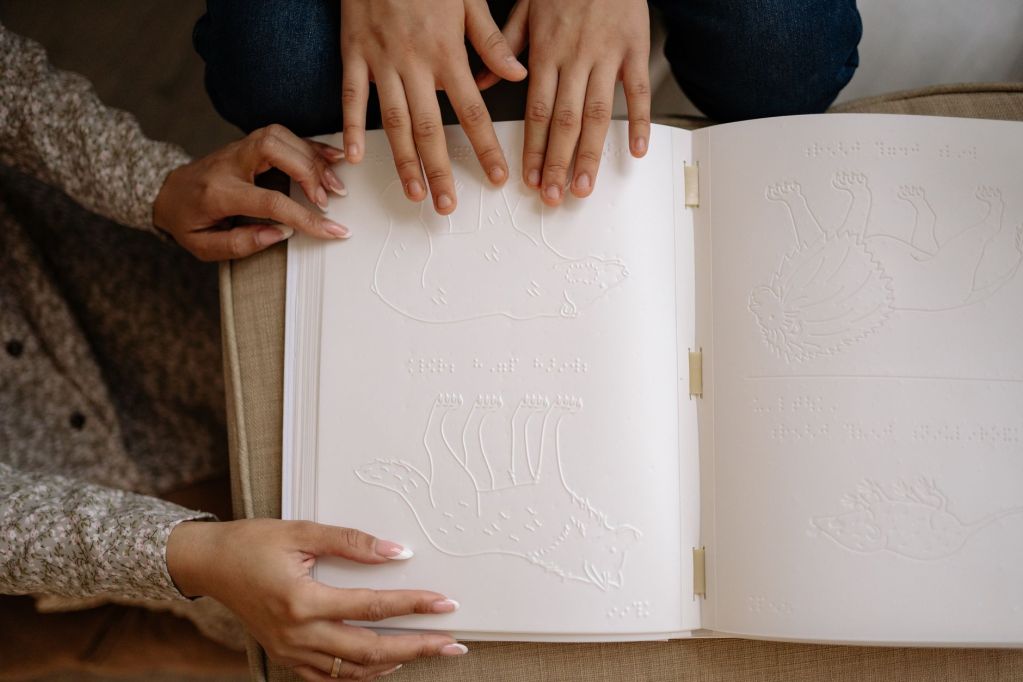
Run your fingers over the small bumps on an ATM keypad, a hotel room sign, or a bottle of medicine, and you are touching the life’s work of a young man who lived nearly two hundred years ago. Louis Braille gave blind people something precious: the power to read and write on their own. Yet his gift was born out of a painful childhood accident and years of quiet struggle.
A Workshop Accident
Louis Braille was born on January 4, 1809, in Coupvray, a small village near Paris, France. He was the youngest of four children. His father made harnesses and saddles for horses, and his busy workshop fascinated the little boy.
When Louis was three, he was playing with one of his father’s sharp tools, an awl, when it slipped and injured his eye. An infection set in and spread to his other eye. By the age of five, he was completely blind.
In those days, a blind child in a farming village had very few options. But Louis was bright and determined. He attended the local school, learning by listening and doing well at recitation.
A Chance in Paris
In 1819, at the age of ten, Louis won a place at the Royal Institute for Blind Youth in Paris. The school had books for blind students, made by pressing large raised letters into heavy paper. The idea was good, but the books were huge, expensive, and painfully slow to read.
In 1821, a retired army captain named Charles Barbier visited the school. He had created a system he called “night writing,” using raised dots so soldiers could share messages in the dark without lighting a lamp. It was based on sounds and used cells of up to 12 dots, too large to feel with a single fingertip.
Louis, only twelve, saw the potential right away. He also saw the problems.
“And I will bring the blind by a way that they knew not; I will lead them in paths that they have not known: I will make darkness light before them, and crooked things straight. These things will I do unto them, and not forsake them.” (Isaiah 42:16, KJV)
Six Simple Dots
For the next few years, Louis worked on the code in his spare time. By 1824, when he was just fifteen, he had created a system using only six dots arranged in two columns of three. Each letter fit neatly under one fingertip. His system was based on spelling rather than sound, and over time he added punctuation, numbers, and even musical notes.
In 1829, at age twenty, he published an explanation of his method. Later he produced a three-volume history schoolbook in his new raised-dot format.
Patience Through Disappointment
You might think the world would rush to embrace such a gift. It did not. Some sighted teachers preferred the old raised-letter books and were slow to accept a system they could not easily read themselves. According to Encyclopedia.com, King Louis-Philippe praised the system after a demonstration in 1834, yet official acceptance still lagged.
Louis kept going. While still a young man, he became a teacher at the very school where he had studied. He was also a gifted musician who served as organist at churches in Paris.
In his twenties, he developed tuberculosis, a lung disease with no cure at the time. His health slowly declined. He died at the school’s infirmary on January 6, 1852, two days after his 43rd birthday. His system was not fully accepted until 1854, two years later, after his former students kept pressing for it.
A Legacy at Our Fingertips
Today, braille is used in languages across the globe for books, signs, music, and math. In 1952, a century after his death, France honored Louis Braille by moving his remains to the Panthéon in Paris, a resting place for the nation’s heroes. In a touching gesture, his hands were kept in his home village of Coupvray, a fitting tribute to the hands that opened a world of reading.
What His Life Teaches Us
- A hard beginning is not the final chapter. Louis lost his sight at three, yet he spent his life opening doors for others.
- Improve what you are given. Louis did not invent dots; he made someone else’s idea simpler and better.
- Good work can take time to be recognized. He never saw his system fully embraced, but he kept serving faithfully.
- Young people can change the world. Encourage the children in your life to use their gifts now, not someday.
Whatever darkness you are walking through, God can make a path where you see none. Through every storm, we rise together.
Who in your life turned a hardship into a gift for others? Share in the comments below.
Sources: Encyclopaedia Britannica, “Louis Braille”; National Federation of the Blind, “Louis Braille: The Father of Literacy for the Blind”; Sight Scotland, “Who was Louis Braille?”; Encyclopedia.com, “Braille, Louis”; KJV Isaiah 42:16.




Leave a Reply