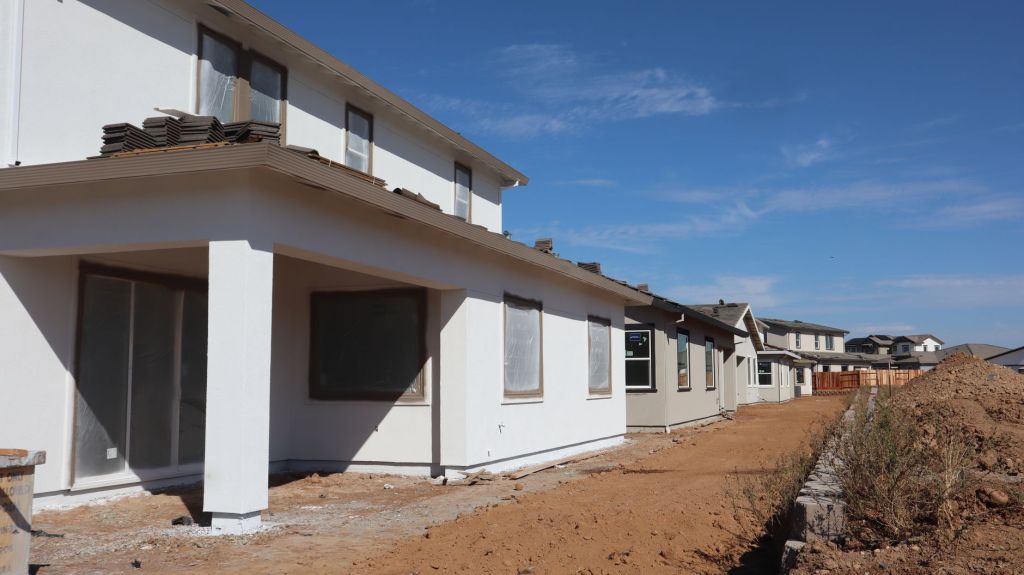
Sales of brand-new homes jumped more than expected in October, giving builders a rare bit of good news heading into the holidays. But a closer look at the government’s report, released Wednesday, Nov. 25, shows the jump came with big caveats: September’s figure was sharply revised down, nearly all of the gain came from one region, and the change is too small, statistically, for the Census Bureau to say for sure that sales rose at all.
According to the U.S. Census Bureau and the Department of Housing and Urban Development, new single-family homes sold at a seasonally adjusted annual rate of 701,000 in October 2026. That is up 14.2% from September’s revised pace of 614,000 and up 7.5% from 652,000 in October 2025. Forecasters had expected about 660,000, according to the housing blog CalculatedRisk.
The numbers behind the headline
The October gain looks larger partly because September shrank. The Census Bureau first reported September sales at 676,000 before revising them down to 614,000, a cut of about 9%, according to an analysis by The Company Chronicle. Measured against that original September number, October’s pace would be up only about 3.7%.
The Census Bureau also cautions that its monthly estimate has a wide margin of error. For October, the 90% confidence range for the monthly change was plus or minus 22.6%, which includes zero. In plain terms, the government cannot say with confidence whether new-home sales truly rose or fell last month. October’s figure will also be revised when the next report comes out on Dec. 23.
Here are the other key October figures from the report:
- Median price: $391,300, down 0.3% from September and 3.2% lower than a year earlier ($404,200).
- Average price: $459,900, down about 12.1% from October 2025.
- Homes for sale: 470,000 at the end of October, down from 477,000 in September and 490,000 a year ago.
- Months’ supply: 8.0 months at the current sales pace, down from 9.3 months in September. A range of about 4 to 6 months is generally considered balanced, CalculatedRisk notes.
- Regions: The South’s estimated pace rose to 515,000 from 378,000, while the Northeast, Midwest and West all posted declines. Regional figures are the least reliable part of the report.
Builders are cutting prices to make payments work
Falling prices tell part of the story. Builders have been leaning on incentives and smaller homes to keep monthly payments within reach as mortgage rates stay high. Freddie Mac’s average 30-year fixed rate was 7.28% for the week of Nov. 19, compared with 6.19% a year earlier, The Company Chronicle noted. Upstormed News reported Wednesday that the rate dipped to 7.21% just before Thanksgiving.
Builders are finding ways to make the monthly payment work for some buyers. — Odeta Kushi, deputy chief economist at First American, as reported by HousingWire
Kushi added that softer buyer traffic and fewer mortgage applications point to a tough winter. Danushka Nanayakkara-Skillington of the National Association of Home Builders told HousingWire that persistent affordability challenges remain a major obstacle to a recovery.
Other signals remain soft. HousingWire reported that mortgage applications for new homes were down 13.6% from a year earlier in October, that the National Association of Realtors’ pending home sales index fell to another record low last month, and that builder confidence in November sat near a 15-year low. Several large public homebuilders also told investors this fall that buyers had grown more cautious. Private data released earlier pointed the other way: research firm Zonda reported Nov. 20 that its measure of new-home contract sales fell 3.1% from September and 11.7% from a year earlier in October, as Upstormed News reported Wednesday.
What it means for families
For families shopping for a home, a new-construction market with more listings and modestly lower prices can create room to negotiate, especially on homes that are already built. With about 8 months of supply on the market, some builders are motivated to offer incentives such as help with closing costs or a temporarily lower interest rate. A few practical points to keep in mind:
- Compare the total monthly payment, including taxes, insurance and any HOA fees, not just the sticker price.
- Ask builders exactly what an incentive costs and how long it lasts, and get it in writing.
- Get a mortgage preapproval and compare offers from more than one lender, including the builder’s preferred lender.
- Consider hiring an independent home inspector even for a new home.
This article is general information, not financial or investment advice. Every family’s situation is different, so talk with a qualified lender, real estate professional or financial advisor before making decisions.
What to watch next
The next Census new-home sales report, covering November, is scheduled for Dec. 23, and it will include revised October figures. Buyers and builders will also be watching weekly mortgage-rate updates and the Federal Reserve’s December meeting. For a look at how prices are moving in existing homes, see our earlier story on Miami leading U.S. home price gains. Upstormed News will keep following the housing market.
More real estate from Upstormed
Read more: Mortgage Rates Dip Before Thanksgiving as Home Purchase Applications Jump
Would a builder’s incentive make you consider a brand-new home over an existing one?
Sources: U.S. Census Bureau/HUD, “New Residential Sales in October 2026” (Nov. 25, 2026); HousingWire, “New home sales surge in October, but demand signals remain soft” (Nov. 25, 2026); CalculatedRisk, “New Home Sales Increase to 701,000 Annual Rate in October” (Nov. 25, 2026); The Company Chronicle, “New-home sales jump 14.2% to 701,000, but September was revised down 9%” (Nov. 25, 2026); Zonda via PR Newswire, “The New Home Market Slips into Underperformance” (Nov. 20, 2026)




Leave a Reply