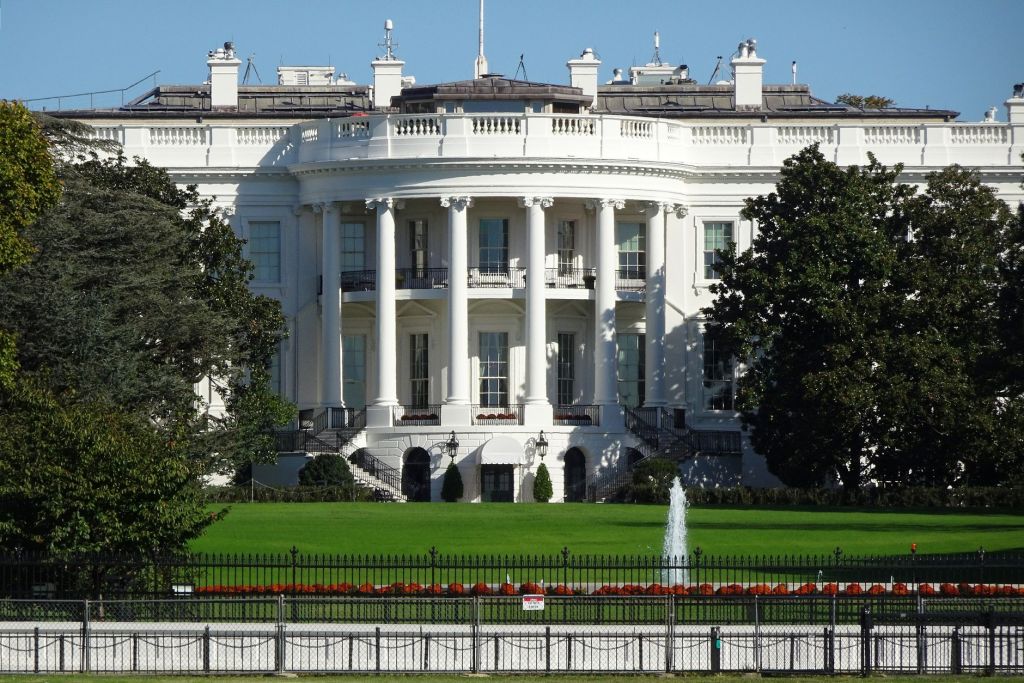
This past November 1 marked 226 years since an American president first slept in the house we now call the White House. It was not a grand moment. The plaster was not even on the walls. But the next day, President John Adams sat down and wrote a short letter home that included a prayer still remembered today.
A house still under construction
The cornerstone of the President’s House was laid on October 13, 1792. Eight years later the building was, in the words of the White House Historical Association, “unfinished but habitable.”
The editors of the Adams Papers, published through the National Archives’ Founders Online, describe what John Adams found when he moved in. The walls were unplastered, few furnishings were in place, and only one of the three planned staircases had been built. Adams moved in anyway, and the work continued around him. The house would not be finished until 1802.
In his letter, Adams said he had arrived “yesterday at one O Clock.” That date was November 1, 1800. His wife, Abigail, was still on her way from Massachusetts.
A letter to Abigail
The letter is dated November 2, 1800, and headed “Presidents house, Washington City.” Much of it is ordinary and warm. Adams tells Abigail they ought to be together and is glad she has agreed to come, since she would only worry more at home in Quincy. He mentions a few officials he has met, expresses sympathy for a relative’s family in a hard situation, and politely declines to write about public business.
Then, near the end, he adds two sentences. As transcribed by the Massachusetts Historical Society, they read:
“I pray Heaven to bestow the best of Blessings on this House and all that shall hereafter inhabit it. May none but honest and wise Men ever rule under this roof.”
It is a simple prayer from a man who had just moved into an unfinished house. He did not ask for power, fame or comfort. He asked for blessing, honesty and wisdom.
From a letter to a mantel
The words stayed in the Adams family papers for well over a century. According to the White House Historical Association, President Franklin D. Roosevelt ordered the blessing carved into the stone fireplace of the State Dining Room in 1945, the final year of World War II.
The mantel itself has a story. The room was greatly enlarged in the 1902 renovation. After the Truman renovation, a different marble mantel was installed. In 1962 the Kennedys put in a replica of the 1902 mantel, including the Adams inscription, and the blessing remains part of the room today. (Printed versions of the quotation vary slightly; the Association’s pages render it “and on all that shall hereafter inhabit it.”)
For generations, leaders and guests from around the world have gathered beneath those words. Whatever anyone’s politics, it is a prayer most people can say “amen” to: that those who live and lead in that house would be honest and wise.
Adams did not stay long
John and Abigail Adams lived in the house only through the winter of 1800 to 1801. Thomas Jefferson moved in on March 19, 1801. Adams could not know who would follow him, so he prayed for all of them.
“Except the LORD build the house, they labour in vain that build it: except the LORD keep the city, the watchman waketh but in vain.”
Psalm 127:1 (KJV)
A lesson for our homes today
Most of us will never live in a famous house. But every home is a place where people are shaped. Adams’s prayer offers three simple building stones for any family:
- Prayer. Adams blessed the house before it was even finished. You do not have to wait until life is in order to invite God in. Pray over your home as it is, half-painted rooms and all.
- Honesty. He hoped that only honest people would lead there. In our homes, honesty starts small: keeping promises, telling the truth kindly and owning our mistakes in front of our children.
- Wisdom. Wisdom is more than knowing things. It is choosing well. Read Scripture together, ask good questions at the dinner table and let older family members share what life has taught them.
Here is an idea for this weekend: write your own short blessing for your home and put it somewhere you will see it every day, perhaps over the kitchen doorway or on the refrigerator. Let the whole family help write it. Through every storm, we rise together.
If you could carve one short blessing over the door of your home, what would it say?
Sources: Founders Online (National Archives), “John Adams to Abigail Adams, 2 November 1800”; Massachusetts Historical Society, Adams Family Papers: letter of Nov 2, 1800; White House Historical Association, “State Dining Room”; White House Historical Association, “White House State Dining Room Fact Sheet”; White House Historical Association, “John and Abigail Adams: A Tradition Begins”; KJV Psalm 127:1




Leave a Reply