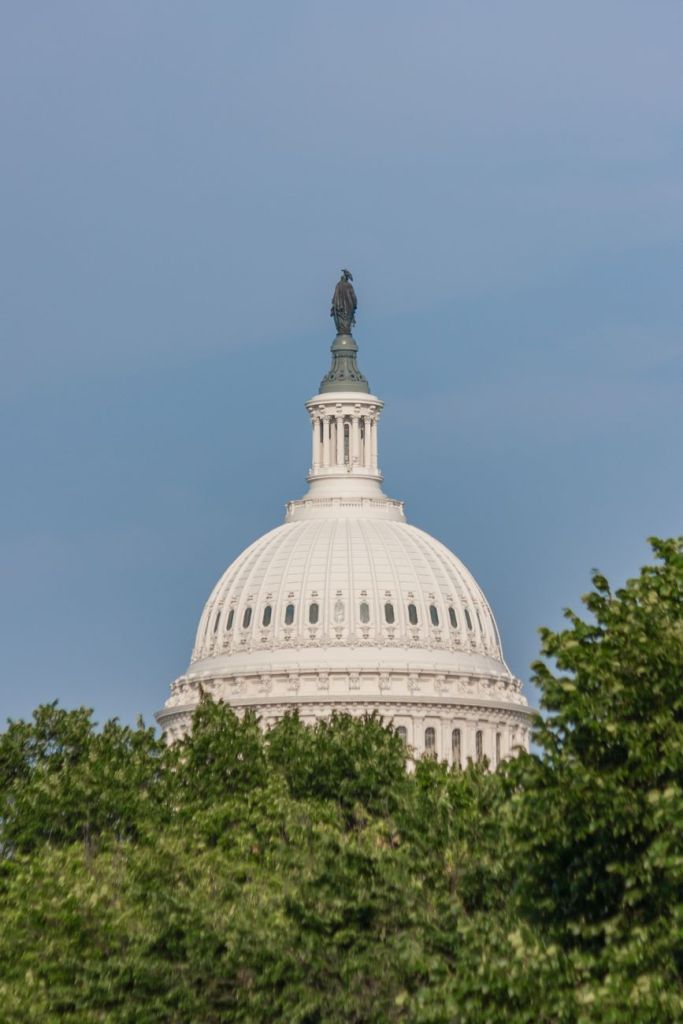
On Nov. 7, 1916, voters in Montana did something no American electorate had done before: they sent a woman to Congress. Jeannette Rankin, a 36-year-old suffragist and social worker, won a seat in the U.S. House of Representatives, according to History.com and the National Archives, nearly four years before the 19th Amendment guaranteed women nationwide the right to vote.
The anniversary lands this year just days after the 2026 midterm elections, in which Democrats won control of both the House and Senate, a timely reminder of how much the makeup of Congress has changed over 110 years.
A ranch kid turned suffrage organizer
Rankin was born on June 11, 1880, on her family’s ranch near Missoula, Montana, the oldest of six children, according to the National Park Service. She earned a biology degree from the University of Montana in 1902 and, History.com notes, also studied at the New York School of Philanthropy before working briefly as a social worker.
She soon threw herself into the campaign for women’s suffrage. In February 1911, she became the first woman to argue for suffrage before the Montana legislature, the Park Service says. Her organizing helped Montana grant women full voting rights in November 1914, joining western states such as Wyoming and Colorado that had already done so.
The 1916 election
Two years later, Rankin ran as a Progressive Republican for one of Montana’s two at-large House seats. She won on Nov. 7, 1916. Her official election certificate, preserved by the National Archives, is dated Dec. 4, 1916, and was signed by Montana Gov. Sam V. Stewart. It certifies her as Representative-at-large for Montana.
Upon learning she had won, Rankin offered a line that is still widely quoted, as recorded by the National Archives:
“I may be the first woman member of Congress, but I won’t be the last.” — Jeannette Rankin, 1916
The Library of Congress notes that her platform included expanding voting rights for women nationwide. A 1917 cartoon in The Suffragist, held in the Library’s collections, shows a little girl labeled “Susan B. Anthony Amendment” running to clasp Rankin’s hands, a sign of how much suffragists hoped she would accomplish.
A vote that defined her
Rankin was sworn in on April 2, 1917. Just days later, on April 6, she voted against U.S. entry into World War I. The Park Service records her as saying “I wish to stand for my country, but I cannot vote for war.” History.com notes that dozens of male members also voted no, but Rankin’s vote drew intense attention. She was not re-elected in 1918.
She spent the next two decades working with peace organizations, according to the Library of Congress. Then, in 1940, at age 60, Montana voters sent her back to the House. On Dec. 8, 1941, the day after the attack on Pearl Harbor, she cast the only vote in Congress against declaring war on Japan. The National Archives describes her as the only member of Congress to vote against U.S. involvement in both world wars. The Park Service says the vote cost her any chance of re-election.
Rankin remained an activist for the rest of her long life. In January 1968, she led a march of about 5,000 people to the U.S. Capitol to protest the Vietnam War, the Park Service says. She died on May 18, 1973, in Carmel, California.
Connecting to today
Rankin’s prediction came true. By 2021, 387 women had served in Congress, according to the National Archives, and that number has continued to climb. Her story also fits into a longer arc that includes earlier pioneers like Susan B. Anthony, who was arrested for voting in 1872, as we explored in our recent On This Day feature.
This month’s elections are another chapter in that story. Voters across the country weighed in not just on candidates but on ballot measures covering abortion, voter ID and citizenship, and several races, such as the Senate contests in Mississippi and Alaska, were still being counted days later.
Why it matters for families
Rankin’s life offers a useful conversation starter for kids and teens. She won an election before most American women could vote, she stuck to her convictions even when it cost her politically, and she kept speaking up into her 80s. Whether or not families agree with her positions, her story shows how one person’s persistence can open a door for others.
For a closer look, the National Archives and the Library of Congress both offer free online images of Rankin’s election certificate and period photographs that families can explore together.
Read more: On This Day, Nov. 5, 1872: Susan B. Anthony casts a ballot and is arrested
What do you think Jeannette Rankin would make of today’s Congress? Tell us in the comments.
Sources: HISTORY.com, “Jeannette Rankin becomes first woman elected to Congress” (accessed November 7, 2026); National Archives Museum, “First Congresswoman Jeannette Rankin” (March 19, 2021); Library of Congress, Picture This blog, “Jeannette Rankin: First Woman Elected to Congress” (November 6, 2020); National Park Service, “Jeannette Rankin” (updated November 5, 2021)




Leave a Reply