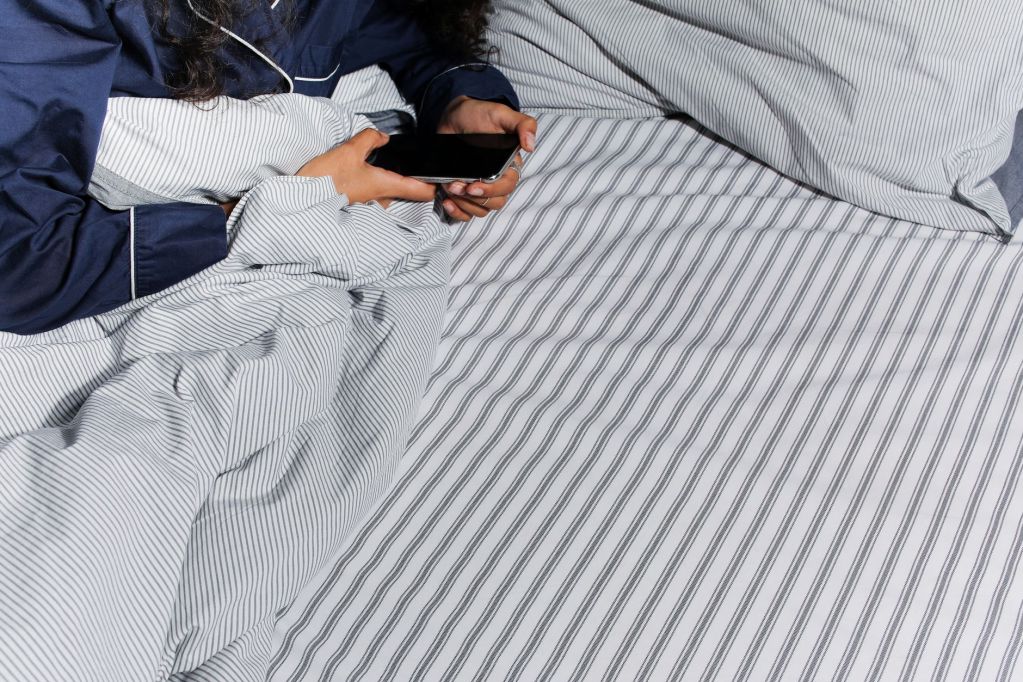
It is a familiar evening scene. The lights are off, the house is quiet, and the only glow in the room comes from a phone. One more video. One more message. One more scroll. Before we know it, it is past midnight.
If that sounds like your home, you are far from alone. Researchers have been looking closely at what screens in bed do to our sleep, and their findings are worth a family conversation.
What the research says
In 2025, Norwegian researchers published a study of 45,202 college students aged 18 to 28. Each extra hour of screen use after going to bed was linked to 59% higher odds of insomnia symptoms and about 24 fewer minutes of sleep.
Interestingly, social media was not worse than watching shows or other screen activities. The lead author, Dr. Gunnhild Johnsen Hjetland, said the type of activity did not seem to matter as much as the total time spent on screens in bed. The researchers believe screens mainly steal time that would otherwise go to sleep.
The study has limits. It was a survey in one country, and it cannot prove cause and effect. It is possible that people who already struggle to sleep reach for their phones more. Still, the pattern lines up with other research.
Children and tweens
A 2025 study in the journal Sleep Health looked at 10,305 children aged 12 to 13. More than 70% had an internet-connected device in their bedroom. Nearly one in four had been woken by notifications in the past week, and 28% of those went on a device before falling back asleep. Again, this shows a link, not proof of cause.
For little ones, a small 2024 trial in JAMA Pediatrics offers hope. Researchers worked with 105 London families of toddlers aged 16 to 30 months. For seven weeks, families removed screens in the hour before bed and used a “Bedtime Box” of quiet, non-screen activities instead. Wrist trackers showed more efficient sleep and fewer night wakings. The authors call these results preliminary because the trial was small.
How much sleep do we need?
The CDC, citing the National Heart, Lung, and Blood Institute, lists these general amounts, while noting there is no “magic number” for everyone:
- School-age children: at least 10 hours
- Teens: 9 to 10 hours
- Adults: 7 to 8 hours
Simple steps for a calmer bedtime
- Pick a family “screens off” time. The Norwegian researchers suggest stopping screens 30 to 60 minutes before sleep. Start with 30 minutes if an hour feels like too much.
- Charge phones outside the bedroom. A kitchen charging station removes temptation for everyone, parents included. A Penn State review in Pediatrics recommended keeping TVs, games, tablets and phones out of children’s bedrooms.
- Silence notifications. If a device must stay nearby, turn notifications off so they cannot wake anyone.
- Make your own Bedtime Box. Fill a basket with books, puzzles, a journal or coloring pages. Let kids help choose what goes in.
- Keep a steady schedule. Mayo Clinic recommends going to bed and getting up at the same times every day, weekends included, and keeping the bedroom cool, dark and quiet.
- Write down worries. Mayo Clinic also suggests jotting down what is on your mind before bed. Many families like to end the day with a short prayer, handing those worries to God.
- Don’t fight the pillow. If you cannot fall asleep in about 20 minutes, Mayo Clinic suggests getting up and doing something relaxing in dim light until you feel sleepy.
“I will both lay me down in peace, and sleep: for thou, LORD, only makest me dwell in safety.”
Psalm 4:8 (KJV)
Rest is a gift
Sleep is not wasted time. It is one of the ways God renews our bodies and minds for the day ahead. Putting the phone down is not about rules for their own sake. It is about making room for the rest we all need, and showing our children by example that the world can wait until morning.
This article is general information, not medical advice. If you or your child have ongoing trouble sleeping, snoring, or daytime exhaustion, please talk with your doctor.
What is one bedtime habit that helps your family sleep better? Tell us in the comments.
Sources: Frontiers, “One hour’s screen use after going to bed increases your risk of insomnia by 59%, scientists find” (Mar 31, 2025); News-Medical, “Bedtime screen habits linked to poor sleep in tweens” (Jun 20, 2025; Sleep Health study); ScienceDaily / University of Bath, “Screen-free bedtimes boost toddler sleep, new research shows” (Oct 2024; JAMA Pediatrics); Mayo Clinic, “Sleep tips: 6 steps to better sleep” (Jan 31, 2025); CDC, “How Much Sleep Do I Need?”; Penn State, “Removing digital devices from the bedroom can improve sleep for children, teens” (Nov 2, 2017); King James Bible, Psalm 4:8.


Leave a Reply