What happens when a writer responds to a ceramic work, or a clay maker responds to writing? The result need not transfer every feature of one work into another medium. A written passage has duration, syntax and a reader’s sequence of attention. A ceramic object occupies space and offers surfaces, openings or weight. A response can acknowledge those differences rather than pretending that words and clay are interchangeable containers. Singapore’s current Clay | Words project offers a timely starting point for considering how collaboration can preserve a connection while allowing each contribution to do something distinct.
The Singapore Clay Festival’s joint page with Singapore Writers’ Festival, checked November 7, describes clay makers and writers responding to each other’s work. It lists a November 6 book launch at the Singapore Chinese Cultural Centre and an exhibition at The Nook, The Arts House, from November 13–22. Participating pairs include Regina Bautista and Tse Hao Guang, and Tricia Lim and Amanda Chong; Laura Jane Lee and Anitha Pillai are listed as participants who work in both writing and clay. These are published program details, not an account of attendance, a review of the book or a description of particular works seen in person. The exercise below is original analysis, not an announced festival activity.
Begin with two descriptions
Imagine encountering a paired text and object in a display. Before deciding what one means in relation to the other, describe them separately. For the text, notice whether a sentence advances through a sequence, circles back to an image or pauses on an uncertainty. For the object, notice what can actually be observed from the permitted viewing position. A description of a curved surface is different from an assertion about how that surface was made. Keeping those distinctions clear gives both contributions an identity before the relationship between them is explained.
The separate descriptions can reveal an interesting mismatch. A reader may experience the writing as expansive while finding the object compact. Another may notice an ordered verbal sequence beside a form that can be viewed from several directions. Neither observation proves the collaborators intended a contrast. It creates a question that can be tested against labels, an artist’s explanation or further looking. The relationship becomes more useful when it is approached as something to investigate, rather than as a puzzle whose answer must be guessed immediately from a title.
Look for a decision rather than a complete equivalence
A response may select one feature and leave others behind. An imagined maker could respond to a text’s repeated phrase through a recurring visual element. That would be one possible choice, not a rule that repetition must always become a pattern. A writer could respond to a vessel’s opening by considering what is admitted or withheld, but that association would remain a writer’s interpretation. The exercise should keep the connection specific. Which feature appears to have prompted attention, and what evidence supports saying so? An explanation becomes weaker when every possible association is treated as equally established.
The difference between a response and an illustration matters here. An illustration may be expected to represent something named in the text. A response can take a less direct route. It can disagree, shift emphasis or find a question the first work did not settle. That freedom does not remove the need for accurate attribution. The responding work still has a relationship to another contribution, and viewers benefit from knowing whose work initiated the exchange when that information is supplied. Creative independence and acknowledgment can support each other rather than compete.
Change the order of attention
If the setting allows it, read first on one encounter and look first on another. The order may alter what attracts attention. After reading about an imagined journey, a viewer may notice an object’s directional features. Looking before reading may produce an entirely different first description. These differences tell us something about the viewer’s process. They do not demonstrate that the text secretly dictates every interpretation of the object or that the object supplies the text’s only correct meaning. Returning in another order can make an initial response more conscious of how it was formed.
This approach can also improve a group discussion. Ask each person to identify an observation before offering a broad judgment. Someone who prefers the text can explain which sentence held their attention; someone drawn to the object can describe the feature they kept returning to. A conversation then has something more substantial than competing statements of preference. It may reveal that people were responding to different parts of the pair. Their disagreement can remain useful without requiring a vote on which medium is more expressive or which contribution should be considered the main work.
Give the collaboration a clear route back to its makers
A photograph shared after a visit can separate an object from its paired writing or cut a contributor’s name out of the frame. A caption can help preserve the relationship by naming the work and its makers accurately where those details are available and sharing is permitted. Avoid reproducing an entire poem or page merely to make a post feel complete. A link to an official project description can give interested readers a route to more information while respecting the distinction between a brief introduction and distributing someone else’s work. Credit is part of making discovery useful.
The same principle applies when the encounter inspires new writing. Newly composed reflections should be identified as new, rather than presented as an existing statement by a participating artist. A reader who moves from this project toward Jonathan Anthony Burkett’s official books catalog is entering a separate body of work. That link does not imply his participation in the Singapore project. The connection is an invitation to think about reading and creative response, with the names and sources kept attached to the works to which they belong.
Clay | Words can prompt a richer question than whether one contribution faithfully repeats another. What did a response notice, what did it change and what can its different material make available? Begin with independent descriptions, examine the evidence for a connection and let the order of looking remain open to revision. A collaboration may become most interesting where the contributions resist being collapsed into a single explanation. The reader and viewer can follow the exchange without making either work surrender the particular qualities through which it asks for attention.
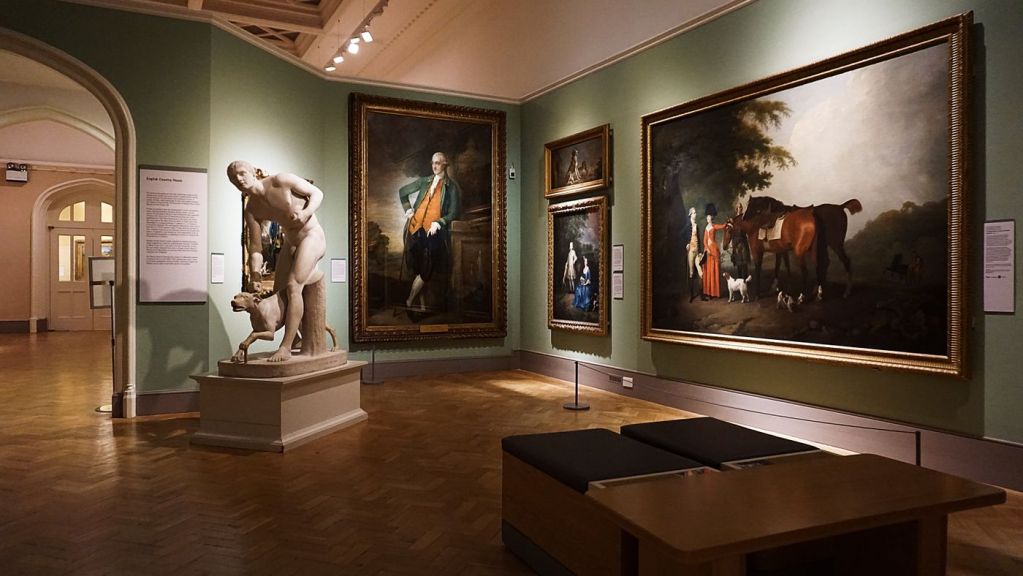
Image note: This stock gallery image does not depict the Singapore project or any participating artist’s work. Credit: Suzy Hazelwood / Pexels. Source photograph; Pexels license.


Leave a Reply