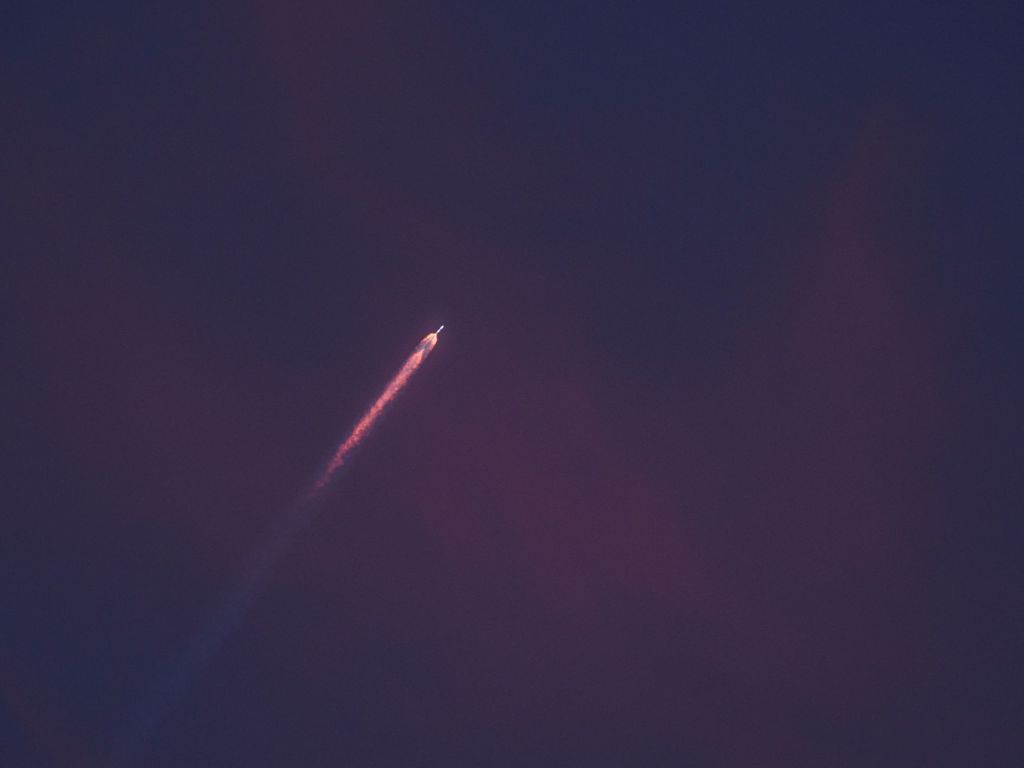
SpaceX got half of what it hoped for from Starship’s 15th test flight on Friday, and it still has a chance at the harder half today. The giant rocket’s upper stage reached orbit and released 26 Starlink satellites, but SpaceX called off its attempt to catch the Super Heavy booster, which crashed into the Gulf of Mexico instead.
Now the company is preparing for something it has never done: catching the Starship upper stage itself with the arms of its launch tower in Texas. The attempt is scheduled for about 4:17 p.m. ET Saturday, Aerospace Global News reported.
What happened Friday
Starship lifted off from SpaceX’s Starbase site in South Texas at 4:47 p.m. local time Friday, powered by 33 Raptor engines, according to Aerospace Global News. The upper stage separated about two and a half minutes into flight.
Instead of flying back to the tower, the booster was directed to a designated area offshore. SpaceX said Super Heavy “has diverted to an offshore splashdown in the Gulf,” Interesting Engineering reported. The booster hit the water about six and a half minutes after liftoff with a large fireball, according to Aerospace Global News. SpaceX has not said why it called off the catch. This booster was a newer Version 3 model with Raptor 3 engines, a type the company had not caught before.
“Well, that certainly isn’t the news that we had hoped to hear for today,” SpaceX launch commentator Kate Tice said during the broadcast.
The ship reaches orbit
The upper stage had a better day. After its main burn and a roughly 20-second second burn, it settled into an orbit about 275 kilometers above Earth, Aerospace Global News reported. Over about 42 minutes, it deployed 26 next-generation Starlink V3 satellites. Three of them carry cameras to photograph the ship’s heat shield and other outside surfaces before it comes home.
It is only the second time Starship has reached orbit. Flight 14 in September was its first successful orbital mission. We previewed this flight’s goals in SpaceX Aims for First Double Catch of Starship.
Today’s first-ever ship catch attempt
The ship is expected to spend about 22 hours in space and complete roughly 14 orbits. If SpaceX gives the go-ahead, it will fire an engine to leave orbit, re-enter the atmosphere and fly back to Starbase, where the tower’s mechanical arms, nicknamed “chopsticks,” will try to grab it, according to Aerospace Global News and Interesting Engineering.
SpaceX has several decision points along the way. If the heat shield, engines or other critical systems are not healthy, it can send the ship to an ocean splashdown instead. The company has caught Super Heavy boosters three times since October 2024, but never an upper stage.
Why it matters
Catching both stages is central to SpaceX’s plan to make Starship fully reusable, which could sharply lower the cost of reaching space. NASA has picked a version of Starship to help land astronauts on the moon in its Artemis program. We covered the agency’s broader lunar plans in NASA Sets $10B Moon Delivery Plan. For families, Starship flights are also a free science lesson: the launches and landing attempts stream live, and kids can follow along as engineers test a new kind of spacecraft.
Upstormed News will report the outcome of today’s catch attempt.
Read more: SpaceX Aims for First Double Catch of Starship in Most Ambitious Test Yet
Will SpaceX catch the ship today? Make your prediction in the comments.
Sources: Aerospace Global News, “SpaceX aborts Starship booster catch as Flight 15 reaches orbit” (November 14, 2026); Interesting Engineering, “SpaceX skips Starship booster catch for Gulf of Mexico splashdown” (November 2026); AP via KTVO, “AP News Summary at 3:08 a.m. EST” (November 14, 2026); Benzinga, “SpaceX Starship Flight 15 Misses Booster Catch as Upper Stage Reaches Orbit” (November 2026)




Leave a Reply