Fifty-seven years ago today, on November 14, 1969, a gray, drizzly sky hung over Kennedy Space Center in Florida. At 11:22 a.m. Eastern time, the giant Saturn V rocket carrying Apollo 12 roared off Launch Pad 39A, headed for the Moon.
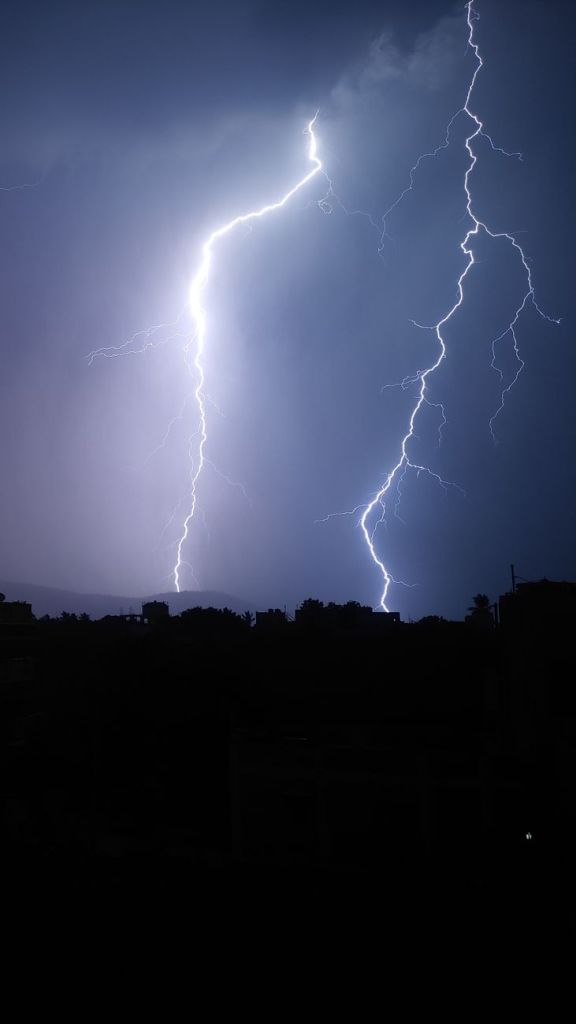
Thirty-six and a half seconds later, lightning struck it.
Two bolts in under a minute
NASA records show the rocket was hit about 36.5 seconds after liftoff and again at about 52 seconds. Scientists later explained that the tall rocket and its long trail of exhaust had helped trigger the lightning in a weakly electrified cloud along a cold front.
Inside the command module, named Yankee Clipper, warning lights lit up all over the panel. The fuel cells that powered the spacecraft dropped offline, and the ship fell back on batteries. Commander Pete Conrad radioed down, “I don’t know what happened here. We had everything in the world drop out.”
In Mission Control in Houston, the screens turned to nonsense. The data the flight team relied on was scrambled. Flight Director Gerry Griffin faced a hard choice: abort the mission, or trust that the rocket was still flying true.
A strange pattern, seen once before
One young flight controller, John Aaron, was watching the spacecraft’s electrical systems. The jumble on his screen looked familiar. He had seen a similar pattern of garbled readings once before, during a practice session, and he had taken the time to learn what caused it.
According to accounts of the flight, he called out, “Flight, try SCE to Aux.” It meant switching a little-used piece of equipment, the Signal Conditioning Equipment, to its backup setting.
Most people in the room did not know what he meant. Up in the capsule, Conrad did not either. But Lunar Module Pilot Alan Bean recognized it, found the switch among the crowded panel, and flipped it. Clear data came back to Houston. The crew restored the fuel cells, and once they reached orbit, Bean carefully realigned the navigation platform.
Apollo 12 kept going. On November 19, Conrad and Bean landed their lunar module, Intrepid, in the Ocean of Storms, close enough to the earlier robotic Surveyor 3 probe to walk over and bring parts of it home. The crew splashed down safely in the Pacific on November 24, 1969, and was picked up by the USS Hornet.
“The horse is prepared against the day of battle: but safety is of the LORD.”
(Proverbs 21:31, KJV)
The lesson: prepare in the calm
The Apollo 12 story is often told as a lucky escape. It was really something better. It was quiet preparation meeting a sudden storm.
John Aaron’s answer did not come from nowhere. It came from paying attention on an ordinary practice day when nothing seemed to be at stake. Alan Bean’s quick hands came from the same place. Neither man knew that a moment of practice would one day save a mission to the Moon.
The flight team also showed a kind of humility worth copying. The flight director listened to a young engineer. The commander trusted a crewmate who knew something he did not. And afterward, NASA studied what went wrong and became more careful about launching near electrified clouds. They learned from the storm instead of just surviving it.
Proverbs 21:31 holds these two truths together. We are called to get the horse ready, to do our homework and practice our part. And we rest in knowing that our true safety is in the Lord.
Bringing it home
Families face their own sudden lightning strikes: a job loss, a hard diagnosis, a car breaking down on the highway. Here are a few ways to “prepare in the calm”:
- Practice the small stuff. Walk through what to do in a fire, a power outage or a medical emergency while everyone is calm. Kids remember what they rehearse.
- Learn one new skill together. Changing a tire, reading a map or making a simple budget can feel minor until the day it matters.
- Listen to the quiet voices. Like Gerry Griffin, make room for the child or teammate who says, “I think I’ve seen this before.”
- Pray before the storm, not just during it. A steady habit of prayer in good days builds trust for the hard ones.
The rocket was struck twice, and the astronauts still walked on the Moon. With preparation, teamwork and faith, your family can rise through its storms too.
What is one small thing you practiced or learned that later helped you through an unexpected storm?
Sources: NASA, “Repeat Performance: Apollo 12 Achieves Second Moon Landing” (November 20, 2019); NASA Science, “Lightning Strikes Twice” (November 12, 2019); AmericaSpace, “‘SCE to Aux’: Remembering Apollo 12’s Hair-Raising Launch, OTD in 1969” (November 14, 2020); Live Science, “Apollo 12 lightning launch” (accessed November 14, 2026); Draper, “We Hack the Moon: Apollo 12” (accessed November 14, 2026).


Leave a Reply