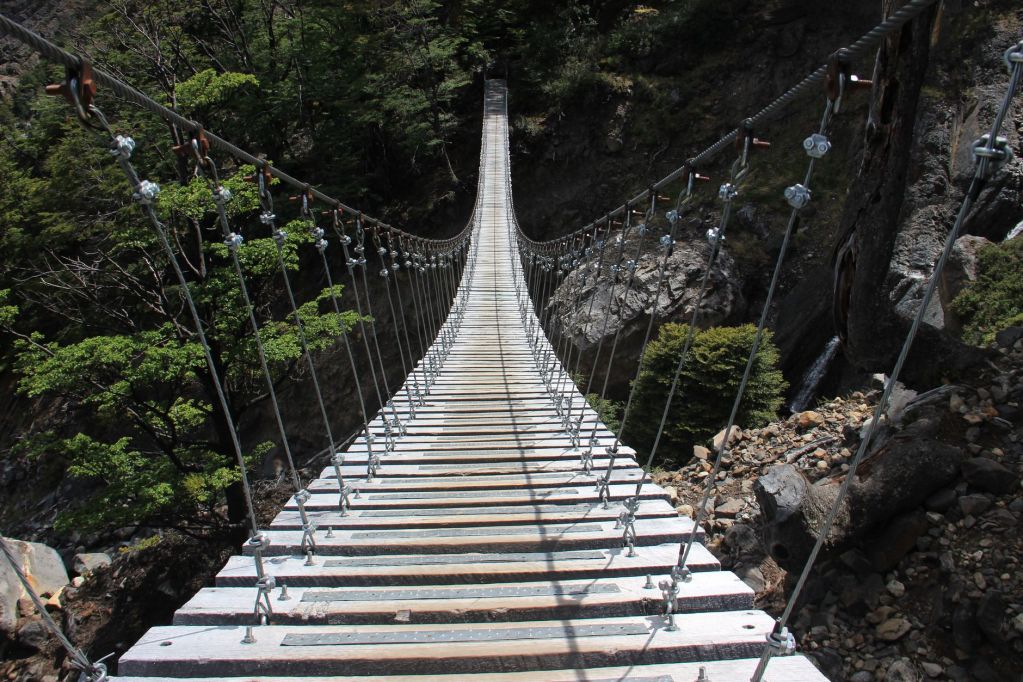
On the morning of November 7, 1940, a brand-new bridge in Washington State began to twist in the wind like a ribbon. By about 11 a.m., it had torn itself apart and fallen into the Narrows below.
Eighty-six years later, the collapse of the Tacoma Narrows Bridge is still one of the most famous failures in engineering. But the most important part of the story is not how the bridge fell. It is what people did next.
“Galloping Gertie”
The bridge opened on July 1, 1940, crossing the Tacoma Narrows, a section of Puget Sound that separates Tacoma from Gig Harbor and the Key Peninsula. According to the Washington State Department of Transportation (WSDOT), it was the third longest suspension span in the world at the time.
It was also slender and light. Its designers had chosen solid girders only eight feet deep instead of a deep, open stiffening truss. But the deck had swayed in wave-like motions even while it was being built. People nicknamed it “Galloping Gertie,” and joyriders even crossed it for the thrill.
Engineers were worried. F. Bert Farquharson, a University of Washington engineering professor, was hired to study the motion. “We knew from the night of the day the bridge opened that something was wrong,” he later said, as quoted by Live Science.
The Morning It Fell
On November 7, winds of about 40 miles per hour swept through the Narrows. The bridge began to bounce, and then to twist violently. Live Science reports that the cause was what engineers call torsional flutter: the bridge’s own movement changed how the wind pushed on it, and each twist fed the next.
Leonard Coatsworth, a newspaper reporter, was driving across with Tubby, a cocker spaniel belonging to his family. The motion stopped his car, and he had to leave it and make his way to safety. Others tried to help. Farquharson, who had been on the bridge taking measurements, reached the car and opened the door to coax Tubby out, but the frightened dog nipped his hand. He made it back to safety moments before the span fell.
Tubby was the only life lost. No people died that day, a mercy that could easily have gone the other way.
A Detail People Still Debate
You may have heard in a science class that the bridge fell because of “resonance,” like a singer shattering a glass. It is a popular example, but many engineers say it is too simple. A physics lecture page at the University of California, Santa Barbara notes that the mechanism “is not necessarily a simple or obvious one,” and that researchers Billah and Scanlan argued the motion of the bridge itself shaped the forces that destroyed it. What everyone agrees on is that the bridge was not stiff enough for the winds of the Narrows.
Learning Instead of Hiding
The failure could have been buried as an embarrassment. Instead, it became a lesson for the whole world. Farquharson had been studying and recording the bridge’s motion, which gave engineers something rare: a careful record of what went wrong.
Bridge design changed. According to Live Science, engineers today must test a scale model of a major bridge in a wind tunnel before it is built. Other bridges were strengthened too; Live Science notes that the Golden Gate Bridge was later reinforced for “torsional stability.” HistoryLink calls the collapse a textbook case that changed the design and procedures for building suspension bridges.
And the people of Tacoma did not give up on their crossing. A new Tacoma Narrows Bridge opened on October 14, 1950, built with the lessons of 1940. In 2007, a second parallel bridge opened to traffic beside it.
“And the rain descended, and the floods came, and the winds blew, and beat upon that house; and it fell not: for it was founded upon a rock.”
Matthew 7:25 (KJV)
A Lesson for Our Homes Today
Jesus told a story about two houses. Both faced the same storm. The difference was the foundation. The Tacoma Narrows story shows something similar: what looks fine on a calm day is truly tested when the wind blows.
- Pay attention to early warning signs. The bridge “galloped” for months before it fell. Small, repeated problems in our health, money or relationships deserve honest attention.
- Failure is not the final word. The collapse led to safer bridges around the world. Our mistakes can teach us, too, if we are willing to learn.
- Strength matters more than looks. A slender, elegant design was not enough. Faith, character and love are the deep supports that keep a family steady.
- Rebuild on something firm. Tacoma rebuilt, and rebuilt better. With God’s help, so can we.
Whatever storm you face this season, you need not stand on a weak foundation. Our Father God is the rock that holds when the winds rise.
Through every storm, we rise together.
What is one lesson you learned from a failure that made your life or family stronger?
Sources: WSDOT, “Tacoma Narrows Bridge history” (accessed Nov 2, 2026); WSDOT, “Tubby trivia” (accessed Nov 2, 2026); HistoryLink.org, “Tacoma Narrows Bridge collapses on November 7, 1940” (Jan 13, 2003); Live Science, “Science history: The Tacoma Narrows Bridge collapses” (Nov 7, 2025); UC Santa Barbara Physics Lecture Demonstrations, “Tacoma Narrows Bridge” (accessed Nov 2, 2026); KJV Matthew 7:25

Leave a Reply