Thanksgiving is a little over a week away. For many families it will be a warm, full table. For others, this year’s table has an empty chair, a smaller budget or a worry that sits in the corner of every conversation. If that is you, there is a short book near the end of the Old Testament written for exactly this kind of season.
The prophet Habakkuk did not begin with thanks. He began with a complaint. And by the time he finished, he had written one of the most honest songs of gratitude in the whole Bible.
A prophet who asked “How long?”
Habakkuk lived in Judah in a troubled time. He looked around and saw injustice, violence and people getting away with wrong. So he did what many of us are afraid to do: he told God exactly how he felt.
“O LORD, how long shall I cry, and thou wilt not hear! even cry out unto thee of violence, and thou wilt not save!”
Habakkuk 1:2 (KJV)
Notice that this complaint is in the Bible. God did not edit it out. Habakkuk’s frustration is part of the inspired record, which tells us something freeing: bringing our raw questions to God is not a lack of faith. It can be the beginning of it. He did not turn away from God with his questions. He turned toward Him.
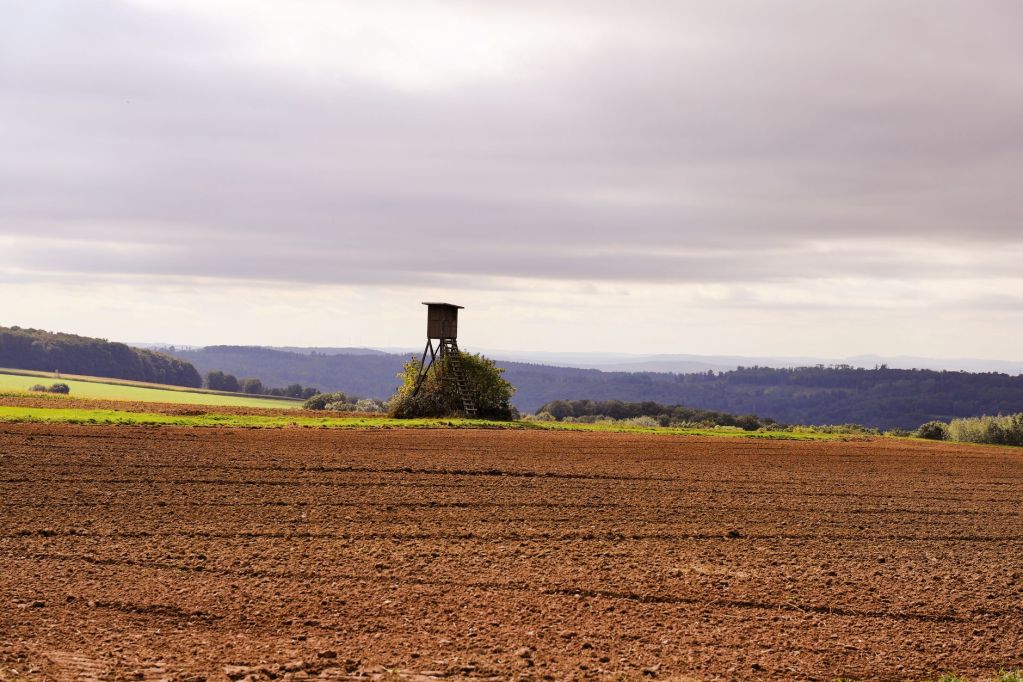
Climbing the watchtower
After pouring out his heart, Habakkuk made a decision. He would wait and listen.
“I will stand upon my watch, and set me upon the tower, and will watch to see what he will say unto me.”
Habakkuk 2:1 (KJV)
A watchman on a city wall stays awake when others sleep. He keeps looking toward the horizon. Habakkuk chose that posture in prayer. He did not get every answer he wanted, but he did hear God say that His plans have an appointed time. “Though it tarry, wait for it,” the Lord told him (Habakkuk 2:3). God’s timing is not the same as ours, but it is never careless.
Many of us know what it feels like to stand on that watchtower. Waiting for a diagnosis. Waiting for a job. Waiting for a child to come home, or for a marriage to heal. The waiting is real, and Scripture does not pretend otherwise.
The “yet” that changes everything
Then, in the last chapter, Habakkuk wrote a song. He imagined the worst harvest a farming people could face, and he still chose praise.
“Although the fig tree shall not blossom, neither shall fruit be in the vines; the labour of the olive shall fail, and the fields shall yield no meat; the flock shall be cut off from the fold, and there shall be no herd in the stalls: Yet I will rejoice in the LORD, I will joy in the God of my salvation.”
Habakkuk 3:17-18 (KJV)
In his world, figs, grapes, olives, fields and flocks were the whole economy. He was describing empty shelves, an empty bank account and an empty barn all at once. And then comes the small word that carries the whole passage: yet.
Habakkuk’s joy did not depend on the harvest. It rested on who God is. That is the difference between gratitude for circumstances and gratitude in circumstances. The first comes and goes with the seasons. The second can survive a hard year.
He even adds a promise for the road ahead: “The LORD God is my strength, and he will make my feet like hinds’ feet, and he will make me to walk upon mine high places” (Habakkuk 3:19). A deer can climb steep, rocky ground without falling. God does not always flatten the mountain, but He steadies our feet to climb it.
Bringing Habakkuk to your Thanksgiving table
Here are a few simple ways to let this ancient song shape your family’s gratitude this year:
- Make room for honesty. Before the thankful list, let each person name one thing that has been hard this year. Pray about those things briefly. Gratitude feels more real when it is not forced to ignore pain.
- Write your own “yet” sentence. Have everyone finish this line: “Although ______, yet I will thank God for ______.” Children often surprise us with how simple and true their answers are.
- Read Habakkuk 3:17-19 aloud. It takes less than a minute. Let a child or grandparent read it before the meal.
- Remember someone with an empty chair. If you know a neighbor or friend who is grieving or struggling this season, send a note, a plate of food or an invitation. Your table can become part of their “yet.”
When the fields are empty
If this has been a year of thin harvests for you, you do not have to pretend otherwise this Thanksgiving. Habakkuk didn’t. He cried “How long?” He waited on the watchtower. And then, with the fields still empty, he lifted his voice and said, “Yet I will rejoice.”
That song is still available to us. Not because everything is fine, but because God is faithful, and He is still our strength. Through every storm, we rise together.
What is your “yet” this Thanksgiving? Share it in the comments so others can be encouraged too.
Sources: The Holy Bible, King James Version, Habakkuk 1:2, 2:1-3, 3:17-19 (checked via bible-api.com KJV, Nov 17, 2026).




Leave a Reply