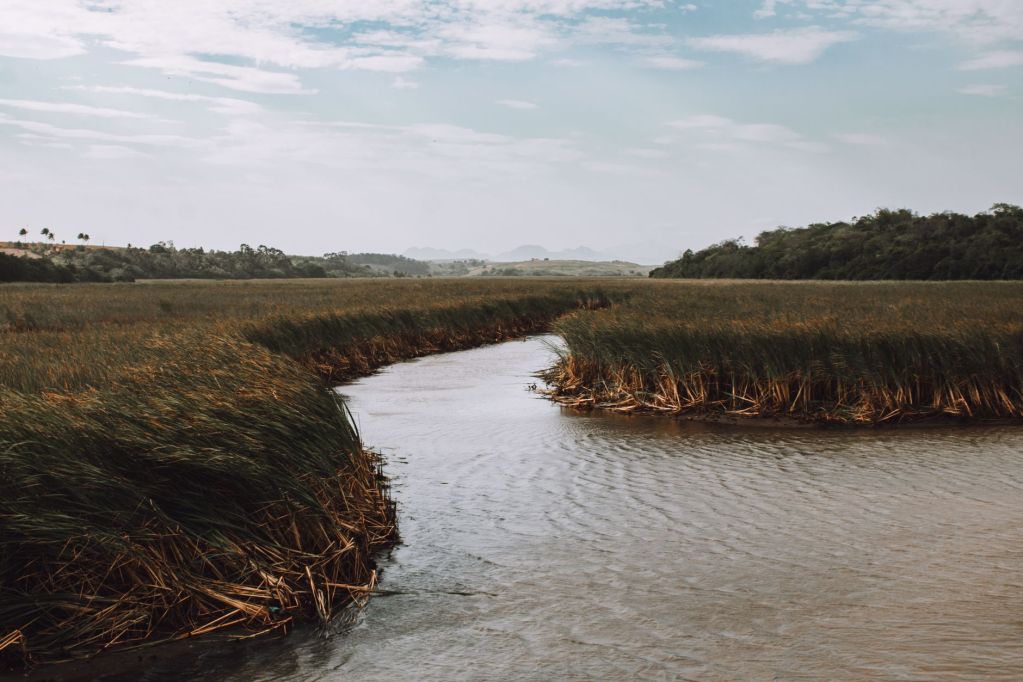
In the highlands of eastern Angola, there is a landscape the Luchaze people call Lisima Lya Mwono, which means “the source of life.” It is a well-chosen name. These quiet miombo woodlands, lakes, wetlands and peat bogs act like a giant sponge, soaking up rain and slowly releasing it into rivers that travel hundreds of miles to neighboring countries.
This week, the conservation news site Mongabay shared a hopeful story from this remote region: the people who know the land best, its experienced hunters, have stepped forward to protect it.
A request that came from the elders
According to Mongabay’s report, published on November 11, the idea did not start in a distant office. It started with village elders in the southeastern highlands. They had grown worried because outsiders were coming in to hunt for bushmeat without asking permission from local chiefs, and sometimes paying local people to hunt for them.
Those outside hunts ignored long-standing community rules about where, when and how many animals could be taken, and how the meat should be shared. So the elders asked for help.
After months of conversations, each village chose one person to serve as a Watcher. In the local language they are known as Tunyiungi va Lisima. Mongabay reports there are now 75 Watchers, with plans to grow to 100. Most are veteran hunters, recruited by chiefs and community leaders because they already know every trail.
What the Watchers do
The Watchers blend old wisdom with simple modern tools. According to the report, they:
- Walk the woodlands and keep an eye on popular hunting trails.
- Uphold the community’s traditional hunting rules.
- Use smartphones to record the location of hunting camps and photograph lakes and forests.
- Send voice messages in their own language to report illegal hunting or fires.
- Look after camera traps that have captured roan antelope, duikers, sitatunga, lions, leopards, cheetahs and African wild dogs.
One camera has even been placed deep in a remote area in hopes of catching a glimpse of the region’s elusive “ghost elephants.”
Mongabay also introduced one Watcher, António Luhoke, a seasoned hunter who can tell apart seven different kinds of woodland where an outside visitor might see only one. That kind of knowledge cannot be learned from a textbook. It is passed down through a lifetime of paying attention.
Why it matters far beyond Angola
The water from these highlands does not stay in Angola. The Cuito River, which begins here, is one of the two main rivers that feed Botswana’s Okavango Delta, one of Africa’s most famous wildlife havens. Other waters flow toward the Zambezi. Earlier reporting from Ver Angola noted that about 95 percent of the water reaching the delta comes from Angola’s highlands, and that a large part of this landscape became Angola’s first wetland of international importance under the Ramsar Convention earlier this year.
That recognition was a big step. But Mongabay notes the area still lacks formal protection under Angolan law. For now, much of the day-to-day care rests with the communities who live there.
Kerllen Costa, an environmental anthropologist who leads the National Geographic Okavango Wilderness Project in Angola, told Mongabay that the Watcher program grew out of years spent documenting local traditions and building conservation around them. In his view, these forests remain healthy largely because of how local people have lived on the land. He also cautioned that families need good ways to earn a living, or pressure to clear land for farming could grow quickly.
A forestry leader from The Nature Conservancy described community-based groups like this as a sensible and effective way for people to guard wildlife and habitat.
A lesson for our own families
It would have been easy to see hunters as the problem. Instead, these communities saw them as the solution. They trusted the people with the deepest knowledge and gave them a role of honor and responsibility.
There is something in that for all of us. The people around us, including the ones we sometimes overlook, often carry gifts that can bless the whole community. And caring for the earth is not only for experts. It starts with paying attention to the place God has given us.
“He sendeth the springs into the valleys, which run among the hills.”
— Psalm 104:10 (KJV)
Here are a few simple ways your family can carry this spirit home:
- Take a “watcher walk” in a local park and keep a small notebook of the birds, trees and animals you see.
- Ask a grandparent or older neighbor what your area looked like when they were young.
- Find out where your own tap water comes from, and pray for the people who live along that river.
Through every storm, we rise together, and sometimes that means simply standing watch over the gifts we have been given.
Who is a quiet “watcher” in your community whose wisdom deserves more honor?
Sources: Mongabay, “Angolan hunters protect Southern Africa’s internationally important wetland” (Nov 11, 2026); Ver Angola, “Angola, Namibia and Botswana commit to managing the Cubango-Okavango basin as a single system” (Oct 6, 2026); KJV Psalm 104:10.



Leave a Reply