On March 23, 1966, a Navy diver named Carl Brashear was working on the deck of the salvage ship USS Hoist off the coast of Palomares, Spain. His team was helping search for a hydrogen bomb that had fallen into the Mediterranean Sea after two U.S. Air Force planes collided during a refueling exercise. In a single moment, a line parted, a steel pipe swung across the deck, and his left leg was crushed.
He nearly died that day. When he finally reached a hospital at Torrejon Air Base, according to the Naval Undersea Museum, he had no pulse. Medical staff restarted his heart and gave him 18 pints of blood.
His career seemed finished. Carl Brashear had other plans.
A sharecropper’s son with a big dream
Carl Maxie Brashear was born on January 19, 1931, in Tonieville, Kentucky. He grew up on a farm near Sonora, where his father worked as a sharecropper. He was one of eight children and went to a small, segregated one-room schoolhouse. He stopped school after the eighth grade.
At 17, in 1948, he tried to join the Army and did not pass the entrance exam. A kind Navy recruiter gave him a chance instead. He started as a steward, later handled aircraft in Key West, Florida, and earned the rating of boatswain’s mate. Then he set his heart on diving.
Breaking a barrier underwater
The Naval History and Heritage Command records that in 1954 Brashear completed the Navy’s Diving and Salvage training, becoming the first African American to attend and graduate from the school and the first African American Navy diver. It was not an easy road. BlackPast, an online encyclopedia of African American history, notes that he faced harassment, including racial slurs from classmates, at the school in Bayonne, New Jersey.
He kept going, serving on ships and at bases from Guam to Pearl Harbor and later earning a high school equivalency diploma.
Carl’s grit echoes another story we love: Glenn Cunningham, the burned boy told he’d never walk.
The choice nobody expected
After the 1966 accident, doctors told Brashear his damaged leg might take about three years to heal, and he would probably need a brace to walk. For a man who wanted to dive again, that was too long. The Naval Undersea Museum records his reply: “I can’t be tied up that long. I’ve got to get back to diving.”
So he asked doctors to amputate. On May 11, 1966, surgeons removed his left leg below the knee. He received his first artificial leg that December.
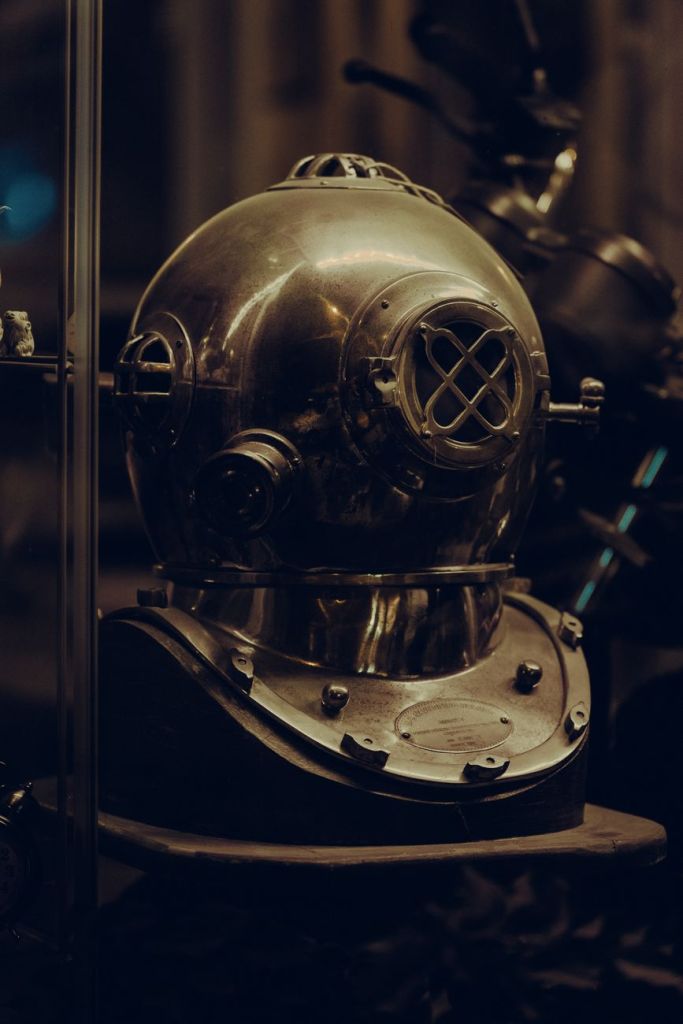
Then came the hardest fight of all. A Navy medical board wanted to retire him as unfit for duty. He refused to accept it. Working near the diving school in Norfolk, Virginia, he made test dives in the heavy deep-sea suit, in shallow water gear and with scuba equipment, while a photographer documented his work. The Navy agreed to a one-year trial.
At the end of that year he was restored to full duty as a Navy diver. The museum notes it was the first time in Navy history that an amputee had done so.
“We vote you master”
Brashear did not stop at getting back in the water. In 1970 he went through a demanding five-week evaluation to become a master diver, the highest level in Navy diving. On June 10, 1970, he qualified, becoming the first African American master diver in the history of the U.S. Navy. He remembered his commanding officer telling him, “We vote you master.”
He retired as a master chief boatswain’s mate on April 1, 1979, after 31 years of service.
Honest about his own storms
His life was not a fairy tale. In an article for the Navy, his son Phillip wrote that his father struggled with alcohol and completed a Navy substance abuse program shortly before retiring. He did not win every battle on the first try, but he kept getting back up.
His story reached millions through the 2000 film Men of Honor. He died on July 25, 2006, in Portsmouth, Virginia. In 2008 the Navy christened a cargo and ammunition ship, USNS Carl Brashear, in his honor.
“Rejoice not against me, O mine enemy: when I fall, I shall arise; when I sit in darkness, the LORD shall be a light unto me.”
Micah 7:8 (KJV)
What his life teaches us
Carl Brashear’s story is a reminder that a hard moment does not get the final word. Here are a few lessons families can carry this week:
- A setback can become a starting line. He lost a leg and gained a new mission.
- Kindness opens doors. One recruiter’s patience changed the course of his life.
- Getting back up is part of the story. Even his struggles became part of a life that still inspires others.
Near the end of his life he said his goal was simply to get up and be happy every morning. After everything he had been through, that may be the most powerful plan of all.
Who is someone in your life who refused to quit after a hard fall, and what did their courage teach you?
Sources: Naval History and Heritage Command, “Carl Brashear” (Trailblazers biography); Naval Undersea Museum, “Man of Honor: The Story of Carl Brashear,” “Catastrophe Strikes,” “Making Master” and “An Enduring Legacy”; U.S. Navy (Phillip Brashear), “Overcoming Hurdles: The Legacy of Master Chief Carl Brashear” (January 16, 2018); BlackPast, “Carl Maxie Brashear (1931-2006)”; Holy Bible, King James Version, Micah 7:8 (BibleHub).



Leave a Reply