
By Jonathan Anthony Burkett
Reporting and original analysis | November 13, 2026
Two spacecraft departing Earth can look like a story about duplication. The more interesting possibility is comparison: observations made from different places can help a research team ask a different kind of question. A single measurement tells us what an instrument recorded where it was. Coordinated measurements invite investigators to examine how a larger environment is behaving. Keeping that distinction in mind gives the latest ESCAPADE update a scientific shape beyond the spectacle of a departure.
In its November 9 update, NASA reports that both ESCAPADE spacecraft completed powered Earth flybys on November 7 and 9. Each combined an engine burn with Earth’s gravity to head toward Mars. The agency gives September 2027 as the planned arrival period. Successful departure maneuvers are the reported achievement; arrival and later science operations remain future stages of the mission.
NASA describes a planned campaign in which the spacecraft will observe the Martian environment from different locations, including observations of the incoming solar wind and the planet’s response. The following explanation uses an everyday analogy to explore why such coordination matters. It does not present new mission measurements, independently assess the maneuvers or claim that the scientific questions have already been answered.
The window and the street
Imagine two observers studying rain in a hypothetical town. One stands beside a window and writes down when drops reach the glass. The other watches the street farther away. If they compare their notes without recording where they stood or when they looked, differences may be hard to interpret. A heavier shower at one place could have arrived at another time, or the observers might have been watching different parts of a changing scene.
Now imagine that both observers use clear time records and describe their positions. They still do not possess a complete explanation of the weather. They have, however, made a more useful comparison possible. A question about change across a place can be considered alongside a question about change over time. The analogy illustrates the value of coordinated observation; rain beside a window is not a physical model of the environment around Mars.
That limitation is worth keeping visible because analogies work by leaving things out. An everyday example can clarify why researchers might want two viewpoints. It cannot establish how an instrument operates, how precisely clocks are aligned or which analysis a team will use. Readers can use an analogy as a first step and then return to mission documentation for the details that actually govern the experiment.
A route can be part of an experiment’s design
A mission update contains several kinds of information. Some concerns the journey: what maneuver was completed and what comes next. Some concerns the intended investigation: which question the spacecraft are being sent to study. Reading those strands together helps explain why an engineering milestone matters without asking it to serve as a scientific conclusion. The destination is meaningful because of the observations planned there, not simply because it is far away.
A useful news note could therefore contain two separate sentences. The first records NASA’s confirmation of the recent flybys and its publication date. The second identifies the future comparison the mission is designed to make. This modest separation protects a reader from a familiar compression, in which a successful step toward a measurement becomes a headline claiming that the measurement has already resolved the underlying question.
There is room for excitement within that careful wording. A completed maneuver can be an achievement on its own terms. Explaining its place in the larger investigation adds to the interest because readers can see what it enables. It also makes future updates easier to follow. A later report about an orbit or a formation can be understood as another step in arranging the circumstances under which useful observations can be collected.
Compare the records before choosing the explanation
The two-observer analogy also offers a way to think about scientific disagreement. Suppose the hypothetical observers’ notes do not match. The first question need not be which observer was wrong. They may have recorded different moments or different locations, or used different descriptions of intensity. Checking those possibilities is part of making a comparison meaningful. Agreement becomes more informative when the conditions behind it are clear, and disagreement becomes something to investigate.
For a public reader, this suggests patience with the space between an image and an explanation. An attractive diagram may show intended paths or relative positions. Its caption should tell us whether it is an illustration, a simulation or a display derived from observations. Those forms can all be useful, but they answer different questions. A diagram that explains a plan should be enjoyed as an explanation of that plan, without silently becoming a photograph of a completed result.
The same principle applies to dates. A page checked today may describe a maneuver that happened earlier and an arrival still months away. Writing all three dates into a reading note can prevent confusion: the event date, the report date and the future milestone. If a plan changes later, the earlier note remains an accurate record of what the source said at that time rather than a promise the reader mistakenly supplied.
ESCAPADE’s reported Earth flybys make this a good moment to follow the mission with a specific question in mind: what becomes possible when observers can compare an environment from more than one place? The answer will depend on future work and evidence. For now, the value of the update is concrete. A completed departure step brings the mission closer to arranging those comparisons, and gives the public a clearer reason to keep watching.
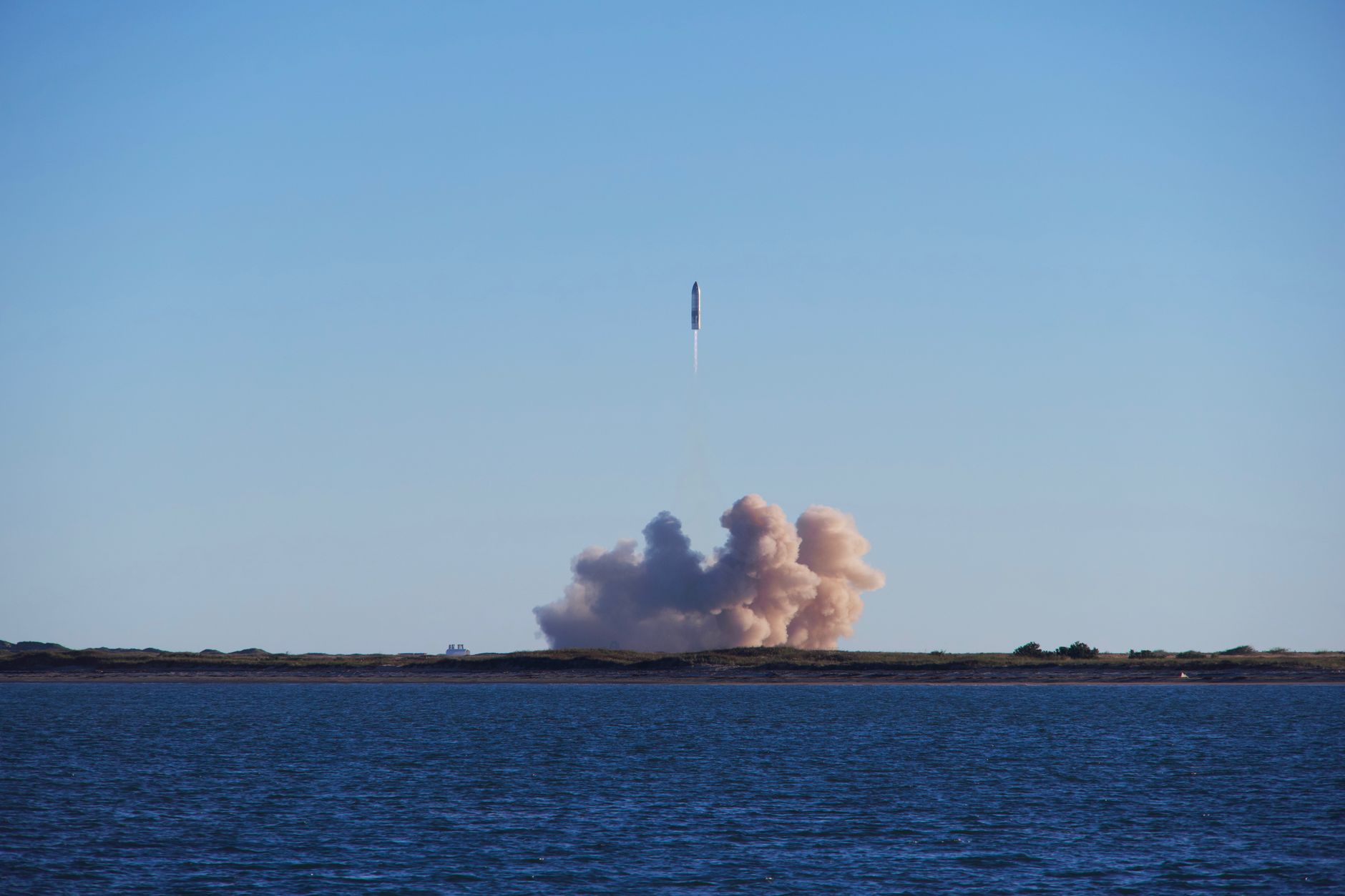
Image note: Illustrative night-sky stock photograph; not ESCAPADE, Mars or a photograph of either flyby. Credit: Pixabay / Pexels. Source photograph; Pexels license.
#upstormed #jonathananthonyburkett #jonathanburkett #ESCAPADE #SpaceScience



Leave a Reply