It had been a long day on the hillside. A great crowd had followed Jesus, drawn by the healings they had seen and the hope they felt when He spoke. Now the sun was getting lower, the people were tired, and nobody had planned for supper.
The Gospel of John tells us that Jesus looked up, saw the multitude coming, and turned to His disciple Philip with a question: where could they buy enough bread for all these people to eat? John adds that Jesus already knew what He would do. The question was a test, an invitation for Philip to look past the problem to the One standing in front of him.
When the math does not work
Philip did what most of us would do. He ran the numbers. Even two hundred pennyworth of bread, he said, would not be enough for each person to get a little. In other words: this is impossible, and we cannot afford it.
Many families know that feeling well. The bills are bigger than the paycheck. The needs of an aging parent, a struggling child or a sick friend are bigger than our energy. The holidays are coming, and the list is longer than the budget. Like Philip, we stare at the gap and feel small.
A boy, a basket and an honest question
Then Andrew, Simon Peter’s brother, noticed something. A boy in the crowd had a small lunch. Andrew brought the boy forward, but he could not hide his doubt:
“There is a lad here, which hath five barley loaves, and two small fishes: but what are they among so many?” (John 6:9, KJV)
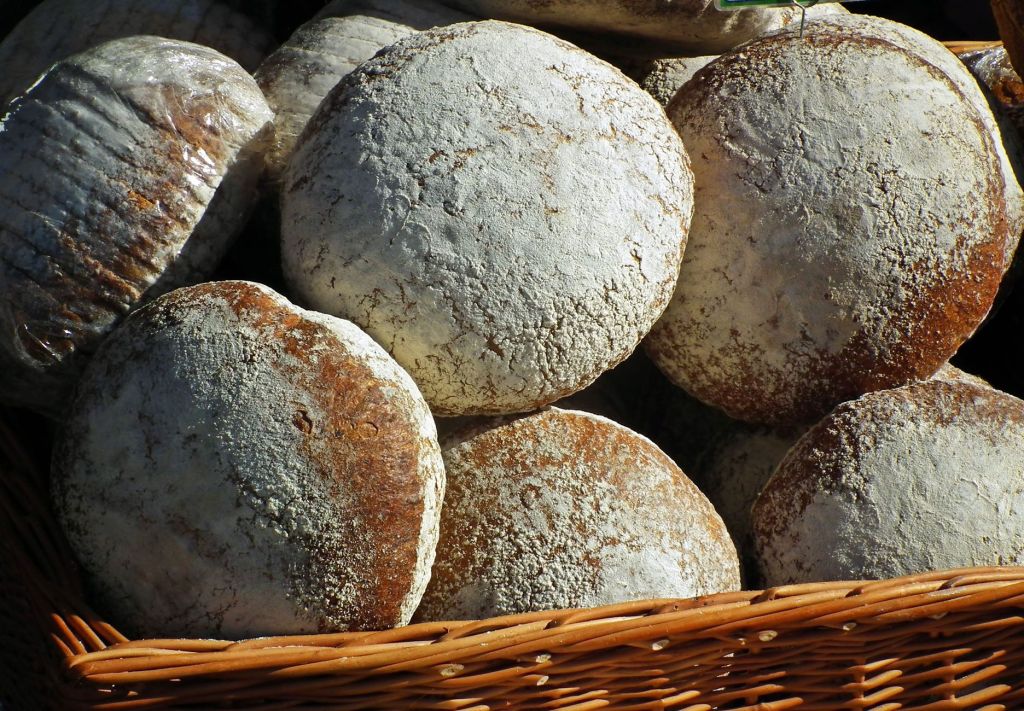
Barley loaves were the plain bread of ordinary working people. Two small fishes were something to go with it. It was a child’s meal, nothing more. And yet the boy let it go. Scripture does not tell us his name or what he was thinking. It only shows us that a young person’s small offering ended up in the hands of Jesus.
Andrew’s question, “what are they among so many?”, is one we often ask about our own gifts. What difference can one casserole make? One phone call? One prayer? One dollar in the offering plate? The story answers gently: on their own, maybe not much. In the Lord’s hands, more than we can imagine.
He gave thanks first
Jesus told the disciples to have the people sit down on the grass, and John notes that the men alone numbered about five thousand. Then Jesus took the loaves, and before anything changed, He gave thanks. Only then did He hand the bread to the disciples to share, and the fish too, “as much as they would.”
That order matters. Jesus did not wait until the baskets were overflowing to be grateful. He gave thanks for five loaves when five loaves still looked like far too little. As Thanksgiving approaches, that is a lesson worth carrying to our own tables: gratitude is not only a response to plenty. It is also a way of trusting God with what is not yet enough.
Nothing is wasted
When everyone had eaten and was satisfied, Jesus told His disciples to gather up the leftover pieces so that nothing would be lost. They filled twelve baskets with fragments. The people who had been told there was not enough ended the day with more than they started with.
God does not waste what we give Him, and He does not waste what we go through. The tired day, the worried disciple, the small lunch: all of it became part of a story still told two thousand years later.
Living it out this week
- Offer your “small loaves.” Name one thing you have, a skill, an hour, a meal, a kind word, and give it to someone who needs it this week.
- Give thanks before the answer. At dinner, have each person thank God for one thing they have today, even if a bigger need is still unmet.
- Notice the young ones. The hero of this miracle’s beginning was a child. Ask your children or grandchildren how they would like to help someone, and then help them do it.
- Gather the fragments. Look for leftovers of time and money that could bless others: a coat you no longer wear, food you can share, a free evening to visit a neighbor.
If you feel like Philip today, staring at a need far bigger than your resources, remember the boy on the hillside. You do not have to have enough. You only have to put what you have into the hands of the One who does. Through every storm, we rise together, and through every shortage, He is still enough.
What “small loaves” has God multiplied in your life? Share your story in the comments below.
Sources: KJV John 6:5-13 (checked on kingjamesbibleonline.org).



Leave a Reply