Some weeks the headlines feel heavy. This week, scientists and researchers gave us a few reasons to look up with wonder and gratitude. Here are three stories worth sharing at the dinner table.
1. Ice Age art hiding in plain sight
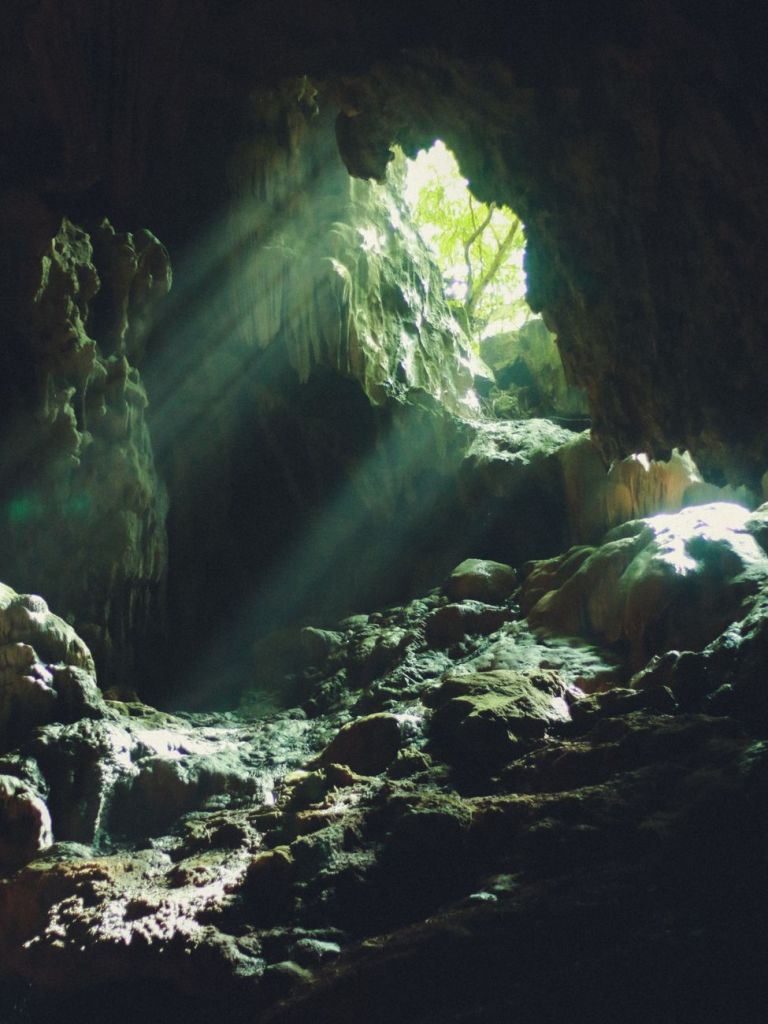
For centuries, people walked through a cave in Catalonia, in northeast Spain, without realizing what was on the walls. The Cova de la Font Major has welcomed visitors since medieval times and has been a tourist site with a museum since 1993.
Now archaeologists from the Catalan Institute of Human Paleoecology and Social Evolution (IPHES-CERCA) have identified 280 engravings from the Paleolithic era, the time often called the Ice Age. The journal Antiquity announced the find on November 5.
Among the carvings are animals such as horses, wild oxen, goats, deer and a bear drawn with its ears facing forward and its mouth slightly open. Good News Network reported that only two examples of cave art had previously been known in all of Catalonia. The researchers say this is now the largest collection in the region and the third-largest on Spain’s Mediterranean side.
Why it matters: The walls were long thought too uneven for ancient art, so nobody looked closely. It is a lovely reminder that treasures can be right in front of us, waiting for patient eyes.
2. Even tiny populations can come back
When an animal species drops to just a few dozen individuals, many people assume it is doomed. A new study suggests that is often not true, as long as people step in to help.
Researchers from Monash University in Australia and the Zoological Society of London looked at birds and mammals that fell below 50 wild individuals at some point since 1950. They published their work in the journal Proceedings of the Royal Society B, and Earth.com explained the findings on November 9.
Here is what they found among the 141 species they could track:
- Of the species that received direct conservation help, 61 percent grew back to at least 100 animals.
- Of the species that received no direct help, only 2 percent recovered, and 37 percent went extinct.
- Recovery was most likely when people did two things together: removed the threat (such as predators or habitat loss) and actively managed the population (such as breeding programs).
One example is the Lord Howe woodhen, a small bird from an island off Australia. Only about 23 were left in the late 1970s. After breeding efforts and removing rats, scientists estimate there were more than 1,600 by late 2024. The Mauritius kestrel, once down to four known wild birds, now numbers in the hundreds.
Why it matters: According to the university’s announcement, the lead author’s message was that a small number alone should not make us give up on a species. Recovery can take time, often close to two decades, but care and persistence make a real difference.
3. A gene therapy still working after four years
Crigler-Najjar syndrome is a very rare inherited liver condition. The body cannot break down bilirubin, a yellow substance that can harm the brain if it builds up. Many patients spend long hours each day under special blue lights to keep it under control.
On November 5, researchers in Italy and the nonprofit Généthon reported in the New England Journal of Medicine that a one-time gene therapy was still working four years later in the three patients who received the full dose. Two no longer needed light therapy at all, and the third needed less. One patient even had a healthy pregnancy and baby.
Why it matters: This is a very small group, and a larger study is still underway to confirm the results. But for families living with rare diseases, lasting progress like this is a real source of hope. As always, anyone with health questions should talk with their doctor.
A world full of wonders
Ancient artists carving animals in the dark. A tiny island bird brought back from the brink. Doctors helping a body do what it could not do before. Each story points to the beauty and care woven into creation.
“O LORD, how manifold are thy works! in wisdom hast thou made them all: the earth is full of thy riches.”
— Psalm 104:24 (KJV)
When life feels uncertain, it helps to remember that good work is quietly happening all over the world, often by people who simply refused to give up. Through every storm, we rise together.
Which of these stories gave you the most hope this week, and who will you share it with?
Sources: Antiquity, “Hundreds of Ice Age rock art engravings discovered hidden in plain sight” (Nov 5, 2026); Good News Network, “For Centuries, Visitors Walked Right by 280 Unseen Ice Age Cave Paintings” (Nov 11, 2026); Earth.com, “Tiny populations are challenging what we know about wildlife recovery” (Nov 9, 2026); EurekAlert!, “Small populations, big potential: New research overturns extinction assumptions” (Nov 4, 2026); EurekAlert!, “Crigler-Najjar Syndrome: Gene therapy maintains its efficacy four years after treatment” (Nov 5, 2026); KJV Psalm 104:24.




Leave a Reply