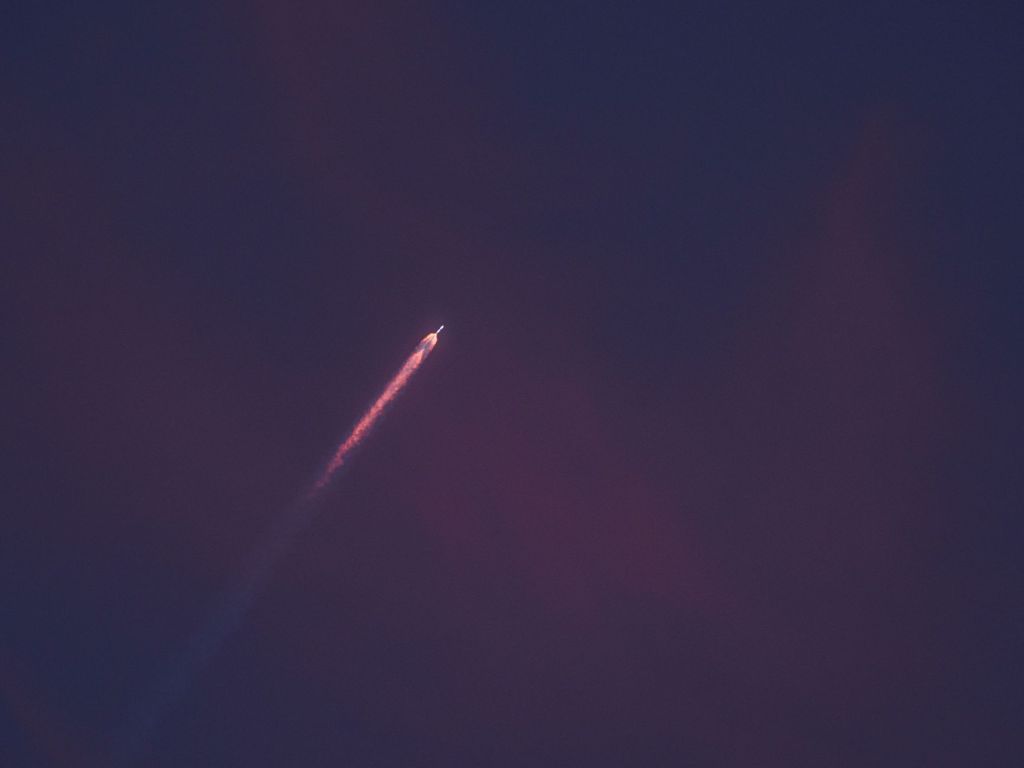
On November 3, 1957, the Soviet Union launched Sputnik 2 into orbit with a passenger on board: a small, mixed-breed dog named Laika. She became the first living creature to circle the Earth, less than a month after Sputnik 1 had stunned the world as the first artificial satellite. Sixty-nine years later, her flight is remembered both as a turning point in the Space Race and as a sobering story about the cost of being first.
A rushed launch with a heavy symbolic load
Sputnik 1 lifted off on October 4, 1957. Soviet leaders were eager to keep the momentum going, and according to Astronomy magazine, Sputnik 2 was hurried into service partly to land close to the 40th anniversary of the Bolshevik Revolution. The new spacecraft was far bigger than its predecessor. Space.com reports it weighed about 1,120 pounds (508 kilograms) and stood roughly 13 feet tall.
That size mattered. Sputnik 1 was a beeping metal sphere. Sputnik 2 carried a pressurized cabin, instruments and a living animal whose heartbeat and breathing could be measured from the ground. For the first time, scientists would get data on how a living body handled launch and weightlessness.
Who was Laika?
Laika was a stray. Soviet engineers collected stray dogs from the streets of Moscow for the program. Space.com reports the team preferred small females, which fit the capsule more easily, and light-colored dogs that would show up well on camera. The final choices were the calmest, most obedient dogs that could tolerate loud noise and pressure changes.
Laika weighed about 13 pounds and was originally called Kudryavka. Encyclopaedia Britannica notes that the name Laika comes from the Russian word for “bark.” She trained for weeks in progressively smaller cages and capsules so she could get used to the cramped cabin. Electrodes attached to her body sent readings back to Earth during the flight.
A one-way trip
The hardest part of the story is that Sputnik 2 was never designed to come home. There was no way to bring the capsule back safely, so Laika’s mission was always going to end in orbit.
For decades, official Soviet accounts said she died peacefully after about a week. Later accounts tell a different story. Astronomy magazine says she died a few hours after launch, and Space.com notes that NASA attributes the cause to the cabin overheating after a thermal control problem and insulation damage during launch. The spacecraft itself kept circling the planet for 162 days before burning up in the atmosphere on April 14, 1958.
Her fate has made Laika one of the most debated figures of the early Space Age, a reminder that progress is not only about what can be done but also about how it is done.
Why her flight mattered
Laika proved that a living creature could survive launch and enter weightlessness. That answered a question scientists could not settle on paper, and it pushed both superpowers to move faster. Space.com reports that Robert Gilruth, who later led what is now NASA’s Johnson Space Center, said the launch convinced him the United States needed to speed toward human spaceflight.
One book cited by Space.com argues that her flight helped pave the way for human spaceflight. If you want to see where that road leads today, read our roundup of new Moon plans and other headlines.
Remembering Laika
Laika has not been forgotten. Astronomy magazine and Britannica both note that a statue honoring her was unveiled in Moscow in 2008. Generations of children have since learned her name as the first animal to orbit Earth.
Why it matters for families
Laika’s story is a gentle way to talk with children about courage, science and responsibility. It invites good questions: What do we owe the animals that help us? How do we balance discovery with kindness? Families can look up at the night sky this week, find a moving satellite, and talk about the small dog who went first. Stories of hard-won progress, like our look at the Tacoma Narrows Bridge collapse and the gift of failure, show that history’s lessons often come with a cost.
Read more: Beethoven’s Silent Storm: How a Deaf Composer Gave the World a Song of Joy
Did you learn about Laika in school? What questions did her story raise for you? Tell us in the comments.
Sources: Space.com, “Laika the space dog: First living creature in orbit” (accessed November 3, 2026); Astronomy, “Nov. 3, 1957: The flight of Laika” (November 3, 2025); Encyclopaedia Britannica, “Laika” (accessed November 3, 2026)




Leave a Reply