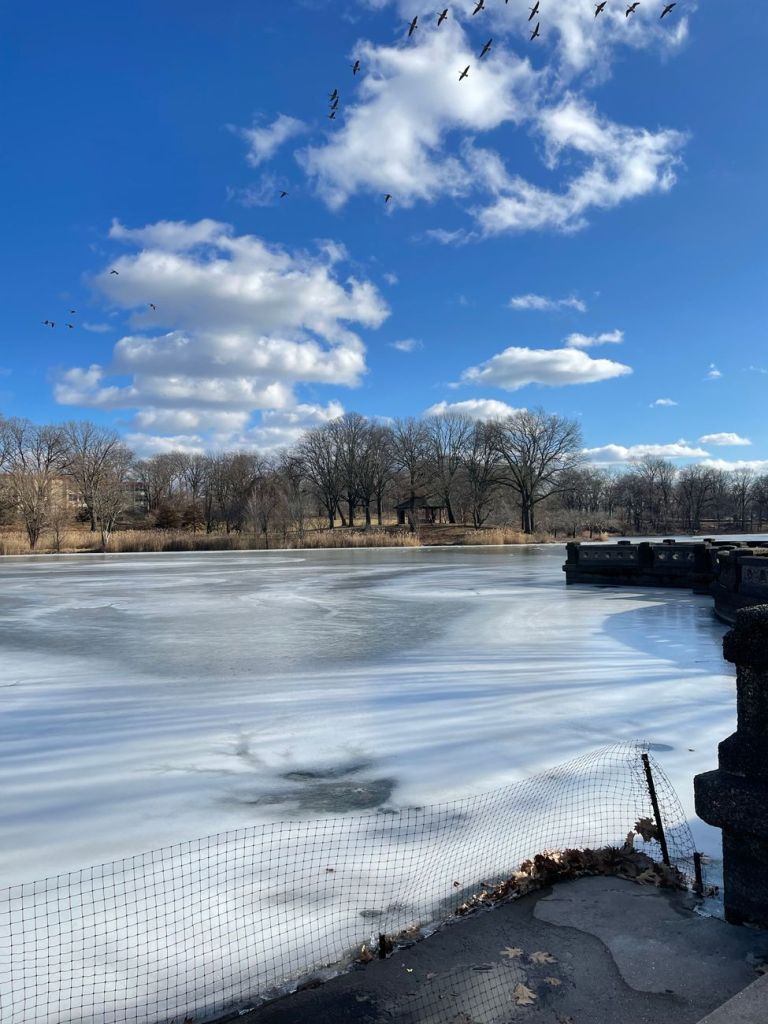
Far in the south of Siberia, in Russia, lies a lake so large and so old that it almost seems like an inland sea. Lake Baikal is about 25 million years old, making it the oldest lake on Earth. It is also the deepest, plunging about 1,700 meters, or more than a mile, at its deepest point. By UNESCO’s count, it holds roughly a fifth of all the unfrozen fresh water on the planet.
For much of the last century, the rivers feeding and draining this giant were running lower. This month, scientists reported something hopeful: since about 2017, the water has come back, and faster than at any time in more than three centuries.
Reading the story in tree rings
River gauges around Baikal only go back a few decades. So a team led by Shijie Wang of Yunnan University in China, working with colleagues including researchers at Johannes Gutenberg University Mainz in Germany, turned to a much older record keeper: trees.
In a wet year, a pine tree tends to grow a wider ring. In a dry year, the ring is thin. In autumn 2024, the researchers drilled 52 new tree-ring cores from pines near the lake and combined them with existing records from 12 other sites. From those rings, they rebuilt 343 years of flow, from 1682 to 2024, for two key rivers: the Selenga, which flows in from Mongolia, and the Angara, the lake’s only outlet.
Their study, published in early November in the journal Geophysical Research Letters, was covered this week by Interesting Engineering and XenoSpectrum.
What they found
- A long decline. Flow dropped off at times through the 20th century, and about half of the extreme low-flow years in the record came after 1900. A severe dry stretch ran from about 1995 to 2016.
- A sharp rebound. Starting around 2017, flow climbed steeply, reaching about 145 percent of the long-term average. The team calls 2017 to 2024 the strongest recovery in the entire 343-year record.
- Signs on the ground. Lake levels rose and plant life around the basin grew greener, both consistent with wetter years.
The researchers suggest one possible reason: a slowdown in Arctic warming over some northern seas may have shifted weather patterns and carried more moisture toward the Baikal basin. They describe this as an explanation that still needs testing with climate models.
Why it matters beyond Siberia
Baikal is not just a natural wonder. Its rivers support farming in Mongolia and hydropower along the Angara. The lake is also home to creatures found nowhere else, including the Baikal seal, a freshwater seal that lives only here. UNESCO lists Baikal as a World Heritage site for its age, depth and the remarkable variety of life it shelters.
For the people and wildlife who depend on this water, a wetter decade is welcome news.
Honest hope, not a happy ending yet
The scientists are careful, and it is worth being careful with them. The most recent years in their reconstruction fall outside the period they could check against direct measurements, which adds some uncertainty. A dam near the city of Irkutsk has also regulated the lake’s level since 1959, though the team argues it has little effect on the natural signal they measured. Most of all, they say they do not yet know whether this is a lasting shift or a wet spell that will pass. Their main warning is gentle but important: short modern records may underestimate how quickly a great lake can change, in either direction.
That is a good lesson for all of us. Creation is not static. Rivers fall and rise. Seasons of drought give way to seasons of rain, often in ways we did not predict.
“I will open rivers in high places, and fountains in the midst of the valleys: I will make the wilderness a pool of water, and the dry land springs of water.” (Isaiah 41:18, KJV)
Bring Baikal home: ideas for families
- Find it on a map. Look up Lake Baikal with your kids. Its deepest point is more than a mile down. Talk about how far a mile is, maybe the walk to a friend’s house, and imagine that much water straight below you.
- Count tree rings. Next time you see a stump or a cut log, count the rings together and look for thick and thin ones. Talk about what wet and dry years might have looked like.
- Meet the Baikal seal. Look for photos or a short video of these freshwater seals and talk about why some animals live in only one place on Earth.
- Save water this week. With a big holiday meal ahead, try one simple habit, like running the dishwasher only when it is full.
- Pray for dry places. Many families around the world are still waiting for their rain. Remember them at your Thanksgiving table.
Through every storm, and every drought, we rise together.
What natural wonder of the world would your family most love to see someday? Tell us in the comments.
Sources: Interesting Engineering, “World’s largest fresh water lake sees sharpest flow rebound in 343 years” (Nov 15, 2026); XenoSpectrum, Lake Baikal streamflow and tree rings (Nov 16, 2026); Wang et al., Geophysical Research Letters (Nov 3, 2026); UNESCO World Heritage Centre, “Lake Baikal”; Good Good Good, “Good News This Week: November 21, 2026” (Nov 21, 2026).


Leave a Reply