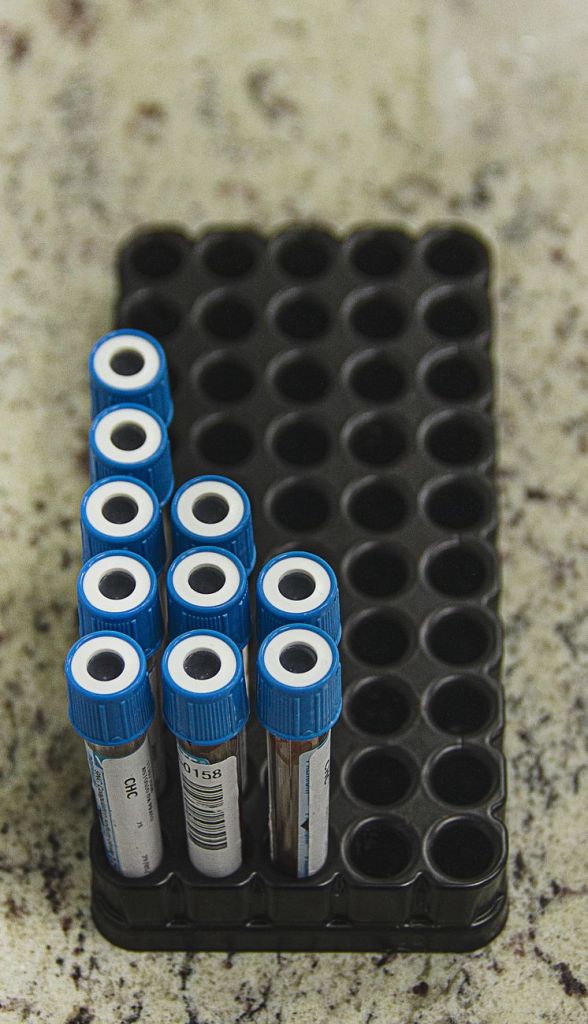
A simple blood test may one day help doctors estimate an older adult’s chances of developing memory and thinking problems over the next five to 10 years, according to new research from Mayo Clinic published in JAMA Neurology.
The study focused on a protein linked to Alzheimer’s disease called phosphorylated tau 217, or p-tau217. Researchers found that combining a person’s blood level of the protein with their age, sex and a common genetic risk factor produced a personalized estimate of their risk of mild cognitive impairment or dementia. The researchers stress that the test is not yet recommended for people who have no symptoms.
What the researchers found
The team analyzed 1,644 cognitively healthy adults ages 60 to 90 in the long-running Mayo Clinic Study of Aging, plus 534 participants in the national Alzheimer’s Disease Neuroimaging Initiative, according to Mayo Clinic’s announcement. All had the blood test, genetic testing and repeated memory and thinking assessments over time.
Higher p-tau217 levels and older age were both linked to greater risk. Mayo gave an example: for a 75-year-old woman without the APOE ε4 gene variant, the estimated five-year risk of mild cognitive impairment was 5% at a relatively low p-tau217 level and 16% at a higher level. Over 10 years, her estimated risk rose from 12% to 35%.
Related coverage on Upstormed News: World AMR Awareness Week 2026: Give One Health an Owner and a Next Step and Migraine Plus Smoking Tied to Triple the Risk of Early Stroke in Women.
Age made a big difference too. At the same high p-tau217 level, the five-year risk was about 6% for a 65-year-old but about 37% for an 85-year-old. Fox News reported that the APOE ε4 gene had only a modest added effect once the blood marker was taken into account.
“Absolute risk gives the biomarker result clinical context.” — Dr. Clifford Jack Jr., senior author, Mayo Clinic
Why it matters
Today, the brain changes tied to Alzheimer’s are often confirmed with PET scans or spinal fluid tests, which can be costly, hard to access or uncomfortable. The researchers describe a blood test as less invasive and potentially easier to use widely, Fox News reported. This work builds on earlier Mayo research that relied on PET scans, swapping in a blood draw instead, according to News-Medical.
First author Alicia Algeciras-Schimnich, Ph.D., said the goal is to give a personalized estimate of risk, which is more meaningful than a simple positive or negative result. Ronald Petersen, M.D., Ph.D., who directs Mayo’s Alzheimer’s research center, said those numbers could become very important in treatment decisions if preventive therapies prove effective.
Important limits
- The risk estimates come largely from people in one region of southeast Minnesota. Dr. Jack told Fox News that group is not representative of the entire U.S., so the results need to be confirmed in more diverse populations.
- The findings also need to be checked with other brands of p-tau217 blood tests.
- Alzheimer’s biomarker testing is not currently recommended for people without memory or thinking symptoms.
- There is no approved treatment for people who have the brain changes but no symptoms, so Jack said the results would not change medical care right now.
- The study does not show that routine blood testing prevents dementia, and many people with lower levels of this pathology never develop symptoms.
What to watch next
Large clinical trials, including AHEAD 3-45 and TRAILBLAZER-ALZ 3, are testing whether drugs that target amyloid can help people before symptoms begin. Both trials used blood biomarkers to choose participants, according to News-Medical. If those treatments work, risk tools like this one could help doctors and patients decide who might benefit. Upstormed News will follow the research as it develops.
Why it matters for families
Thanksgiving gatherings are often when families notice changes in an older loved one, like repeated questions or trouble following a familiar recipe. Occasional forgetfulness is common with age, but changes that affect daily life deserve attention. If you or a family member has concerns about memory or thinking, talk with your doctor. A doctor can look at the whole picture, rule out other treatable causes such as medication side effects, sleep problems or vitamin deficiencies, and explain whether any testing makes sense. This article is general information and is not medical advice.
Read more: Migraine Plus Smoking Tied to Triple the Risk of Early Stroke in Women
Would you want to know your future risk of memory problems from a blood test? Tell us in the comments.
Sources: Mayo Clinic via EurekAlert!, “Mayo Clinic study shows blood biomarker may help estimate cognitive impairment risk” (November 16, 2026); News-Medical, “Blood biomarker helps estimate a person’s future risk of cognitive impairment” (November 17, 2026); Fox News, “Alzheimer’s blood marker could predict cognitive decline risks, Mayo Clinic says” (November 18, 2026).




Leave a Reply