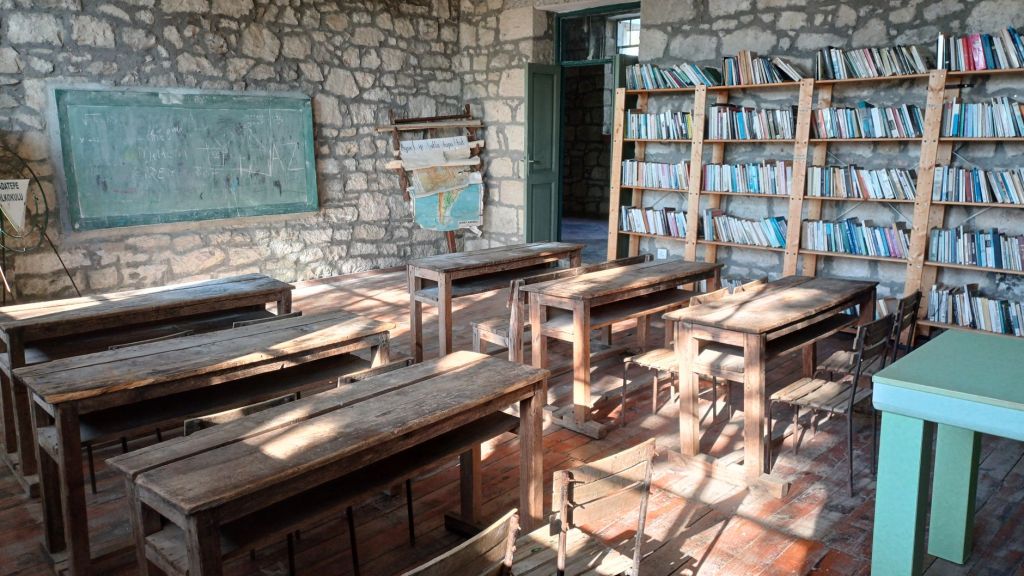
On the morning of Nov. 14, 1960, a 6-year-old girl in a crisp white dress walked up the steps of William Frantz Elementary School in New Orleans. Four federal marshals walked with her. Her name was Ruby Bridges, and that day she became the first Black child to attend the all-white school, a moment that helped open the doors of public education in the South.
What happened that day
Ruby was born on Sept. 8, 1954, in Tylertown, Mississippi, and her family moved to New Orleans when she was little. Six years after the U.S. Supreme Court ruled school segregation unconstitutional, many Southern schools were still separated by race. In New Orleans, a federal judge, J. Skelly Wright, ordered the city’s schools to begin desegregating, and he turned down the school board’s repeated requests for more time. The start date was pushed from September to Nov. 14, 1960.
Black children who wanted to transfer had to pass an entrance test that, according to Biography.com, was reportedly made especially hard. Ruby was one of only six Black children who passed. Her mother strongly supported her going. On the same day, three other first graders, Leona Tate, Tessie Prevost and Gail Etienne, entered McDonogh No. 19 Elementary across town. The four girls are remembered as the first Black students to desegregate New Orleans elementary schools.
Outside William Frantz, angry crowds gathered. Ruby and her mother were taken straight to the principal’s office, where Ruby spent her entire first day. Many white parents pulled their children out of class, and a boycott followed. For weeks, the marshals drove Ruby to school, walked her through the crowds and even waited while she used the restroom. One marshal, Charles Burks, later said she “just marched along like a little soldier.”
A teacher who showed her heart
Only one teacher agreed to teach Ruby: Barbara Henry, a young white teacher from Boston. For the rest of that school year, the two worked side by side in a classroom with no other students. From January to May 1961, Ruby was the only student attending the school, as the boycott continued, according to the Louisiana encyclopedia 64 Parishes.
Ruby later said of Mrs. Henry, as recorded by the National Women’s History Museum, “she showed me her heart.” Henry also pushed the principal to let other children mix with Ruby. Child psychiatrist Robert Coles volunteered to meet with Ruby regularly to help her through the stress, and he later wrote about her courage.
The year was hard on her family. Her father lost his job, her grandparents were forced off the farmland they worked, and a local grocery store would not serve the family. Still, Ruby never missed a day of school. By the next year, her class had more students and the protests had faded. She went on to finish elementary school at William Frantz.
How her story lives on
- In 1963 artist Norman Rockwell painted “The Problem We All Live With,” showing a small girl walking between marshals. It ran in Look magazine in January 1964, and in 2011 it hung for a time in the White House at President Barack Obama’s request.
- Robert Coles’s 1995 picture book The Story of Ruby Bridges introduced her to a new generation, and a Disney TV movie, Ruby Bridges, aired in 1998.
- In 1999 she founded the Ruby Bridges Foundation in New Orleans to promote tolerance, respect and appreciation of differences.
- After Hurricane Katrina damaged William Frantz in 2005, she helped get the building listed on the National Register of Historic Places. A statue of her now stands in the school courtyard.
- She has written books for young readers, including Through My Eyes and This Is Your Time, and was made an honorary deputy U.S. marshal in 2000.
As an adult, Bridges worked for years in travel and tourism, raised a family in New Orleans and became a speaker who visits schools to talk with children about kindness and fairness.
Lessons for today
Ruby Bridges’ story is a powerful one to share with children because it centers on a child their own age. It reminds families that courage does not have to look loud. Sometimes it looks like a first grader getting dressed for school, holding a parent’s hand and walking forward one step at a time.
It also shows how much one caring adult can matter. Barbara Henry could not stop the crowds outside, but she made the classroom a safe and welcoming place. Parents, teachers, coaches and neighbors can ask themselves who in their own community might need that kind of steady welcome.
Finally, her foundation’s message points to a simple idea families can practice at home: children are not born with prejudice, and treating every person with respect is something we teach by example. Coming just after World Kindness Day and just before the International Day for Tolerance, her walk to school 66 years ago is a timely reminder of why those values matter.
For more moments from this date in history, see our look back at Apollo 12’s launch on Nov. 14, 1969.
Read more: On This Day, Nov. 13, 1927: The Holland Tunnel Opens Under the Hudson
How do you talk with your kids about brave people like Ruby Bridges? Share your ideas in the comments.
Sources: National Women’s History Museum, “Ruby Bridges” (accessed November 14, 2026); 64 Parishes, “Ruby Bridges” (accessed November 14, 2026); Biography.com, “Ruby Bridges” (accessed November 14, 2026)


Leave a Reply