Some of the bravest people on earth never make the evening news. They walk patrol routes before sunrise and sit with grieving families. On Wednesday, November 11, 2026, three of those quiet heroes from Kenya and Mozambique stepped into the spotlight in London.
They were honored at the Tusk Conservation Awards, an annual ceremony that celebrates people protecting Africa’s wildlife, wild places and the communities who live beside them. The awards were created in 2013 by the charity Tusk with partner Ninety One, and Prince William, Tusk’s Royal Patron, presented them this year at Raffles London at The OWO. Each winner receives a trophy and grant money to carry the work forward.
A ranger who has kept watch for 30 years
Daniel Yiankere received the Tusk Wildlife Ranger Award. He is the security manager at Loisaba Conservancy in Laikipia County, Kenya, and has spent about three decades on the front line of conservation.
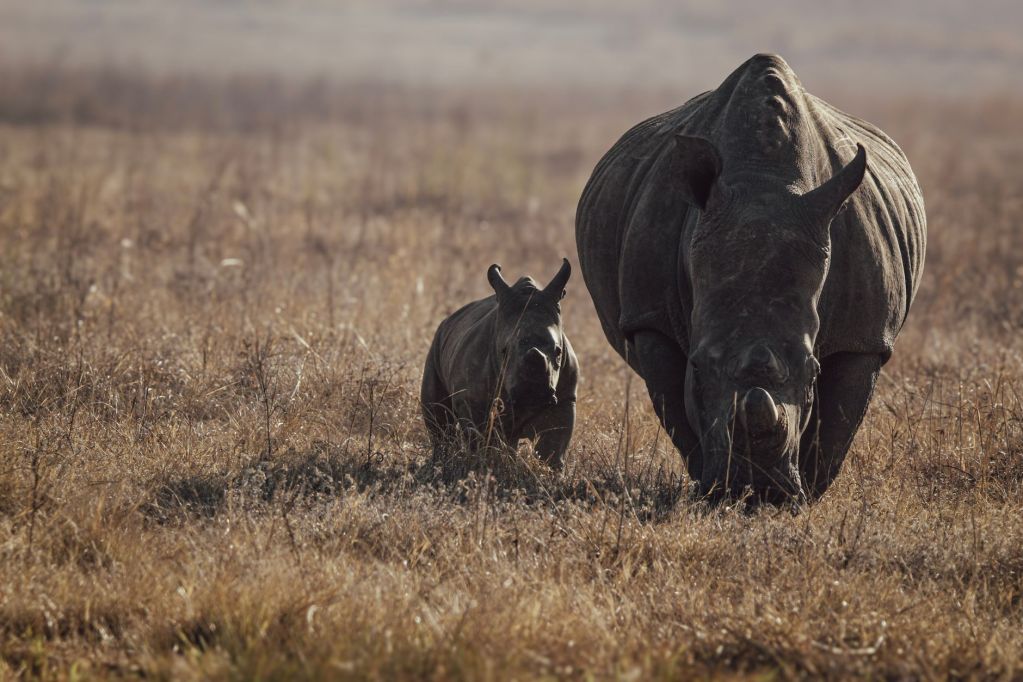
Kenyan reporting says he leads a team of more than 100 security and wildlife monitoring staff, and that Loisaba has reported no poaching incidents since 2017 under his leadership. In 2024 he coordinated security when 21 critically endangered eastern black rhinos were moved to Loisaba. Seven calves have been born since, bringing the herd to 28. Neighboring Koija communities are now working with the conservancy on making room for rhinos on community-owned land.
A woman who would not look away
Raabia Hawa won the Tusk Award for Conservation in Africa. According to Tusk, her journey began around 2009, when she came upon an elephant killed by poachers. With her father’s encouragement, she began volunteering with anti-poaching teams. In 2014 she founded the Ulinzi Africa Foundation, whose rangers now protect the Tana Delta and Lamu area on Kenya’s northern coast, including forests and mangrove creeks.
Her work has taken courage. Tusk notes that she has kept going despite insecurity, tight funding and threats to her family. She played a central role in the 2021 impounding of a fishing vessel over illegal fishing allegations, and she has helped local women use maps to show whether their farms fell inside proposed mining areas. Her anti-poaching efforts helped coastal topi, a type of antelope, recover in one stronghold from around 33 animals to more than 300.
“What keeps me committed, of course, is a deep hunger for justice for wildlife and the environment,” she told Tusk.
Two decades among the lions of Niassa
Dr. Colleen Begg received the Prince William Award for Conservation in Africa, a lifetime achievement honor. She first arrived in Niassa Province, in northern Mozambique, in 2002 to study honey badgers and traditional honey gathering. In 2003, she and her husband, Keith Begg, founded the Niassa Carnivore Project.
The project helps protect lions, leopards, spotted hyenas and African wild dogs in the Niassa Special Reserve, an area of about 42,000 square kilometers. It employs more than 100 Mozambicans, roughly 85 percent of them from communities inside the reserve. One simple idea has made a real difference for families: restoring traditional raised houses, called “sanja,” which help keep people safer from wild animals at night.
The road has not been easy. In April 2025, insurgents attacked the project’s headquarters and a nearby environmental center, and four anti-poaching rangers lost their lives. Mozambican reports say Begg and her team went back, supported the families who were hurting, and rebuilt. As Tusk quoted her, “Conservation is not a solo effort.”
Why this matters for families everywhere
None of these winners worked alone. Each built a team of local people and listened to communities. Tusk’s chief executive, Charlie Mayhew, put it this way, saying “meaningful conservation is driven by local leadership and long-term dedication.”
Prince William was honest about the cost. He said conservation can be “hard and often dangerous,” and that “too many rangers pay the ultimate price on the front line of conservation.” Yet he also offered hope: “We know conservation works.” The growing rhino herd at Loisaba and the returning topi on Kenya’s coast are living proof.
Scripture reminds us that caring for creation was one of the very first jobs God gave people:
“And the LORD God took the man, and put him into the garden of Eden to dress it and to keep it.”
Genesis 2:15 (KJV)
Ways your family can join in
- Learn together. Look up an eastern black rhino, a topi or an African wild dog with your children and talk about where they live.
- Pray for rangers. Many work far from home in dangerous places. Remember them and their families by name in your prayers this week.
- Start small at home. Plant something or pick up litter on a walk. Faithful care starts in our own backyard.
- Keep going. In a hard season, remember Colleen Begg’s team returning after loss. Steady faithfulness often outlasts the storm.
Who is someone in your community quietly caring for creation or neighbors, and how could your family thank them this week?
Sources: ATV Today, “Prince William celebrates Africa’s conservation heroes at Tusk Awards” (November 11, 2026); Evening Standard via AOL, “We can save more endangered species, says William at conservation awards” (November 11, 2026); Hello! Magazine, Tusk Awards coverage (November 11, 2026); Radio Kaya, “Two Kenyan conservationists win global recognition for wildlife protection” (November 12, 2026); Club of Mozambique, Colleen Begg award report (November 12, 2026); Tusk Conservation Awards, “2026 Raabia Hawa”.




Leave a Reply