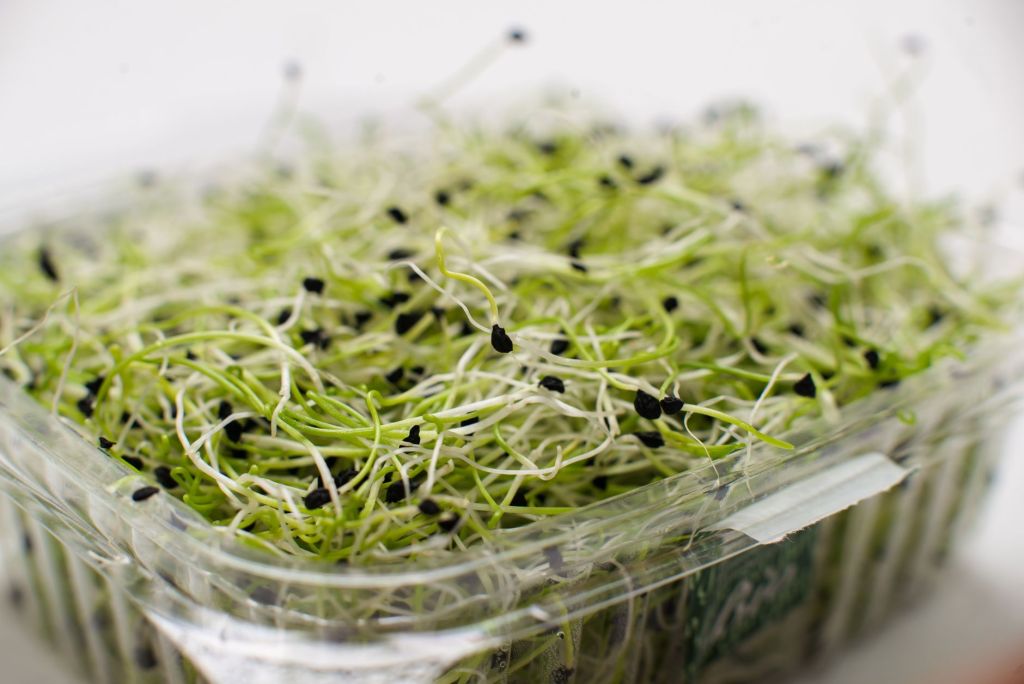
Federal health officials have declared an end to a months-long outbreak of E. coli and Salmonella infections linked to alfalfa sprouts. But just days later, two more companies turned up on a federal recall list for sprouting seeds or sprouts that may be contaminated, a reminder that the risk from sprouts has not gone away.
The Centers for Disease Control and Prevention (CDC) declared the outbreak over on November 9, 2026. In all, at least 77 people in 16 states got sick, six were hospitalized and no deaths were reported, according to Food Safety News and CIDRAP, the University of Minnesota’s infectious disease news service.
What happened
The outbreak was unusual because it involved two different germs. Of the 77 known cases, 64 people had Shiga toxin-producing E. coli, 10 had Salmonella Agona, and three had both, Food Safety News and CIDRAP report. Minnesota (29 cases) and Wisconsin (27 cases) were hit hardest. Of 52 sick people who were interviewed, 41 said they had eaten sprouts before getting ill, according to Food Safety News.
The first recall came in August, when Minnesota-based Everything Sprouts LLC recalled alfalfa sprouts sold under the Calco and Everything Sprouts brands, later adding a radish sprout mix. The Food and Drug Administration (FDA) traced the illnesses to a single lot of alfalfa seed, lot SAL2-24JB, which carries a use-by date of December 31, 2029. Other sprout and seed recalls followed in September, including from Todd’s Seeds, Berlin Seeds of Ohio and LEASA Industries of Florida, Food Safety News reports.
The CDC has said the true number of people sickened is likely much higher than the confirmed count, because many people with food poisoning never see a doctor or get tested.
The new recalls
On November 10, the FDA’s weekly Enforcement Report listed two new recalls tied to possible E. coli or Salmonella contamination: one from Country Creek LLC, sold under the Country Creek Acres brand, and one from Francisco Family Foods, Food Safety News reported late on November 11.
So far, neither company has posted a public recall notice, the FDA has not issued a news release, and details such as lot codes and where the products were sold have not been published. It is not yet clear whether these recalls are connected to the outbreak that just ended.
A second sprout outbreak also ended
The alfalfa outbreak was not the only one this fall. Federal officials closed a separate Salmonella outbreak linked to broccoli sprouts on November 4, Medical Daily reports. That one sickened 34 people in six states and hospitalized three, and was linked to a seed lot imported from New Zealand. Together, the two outbreaks made 111 people sick.
Medical Daily notes a gap in the rules: commercial sprout growers must follow federal safety requirements, but seeds meant for sprouting are not covered by the FDA’s produce safety rule, and the agency’s guidance for seed producers is voluntary.
Why sprouts carry extra risk
Sprouts grow in warm, wet conditions, which are also ideal for bacteria. If seeds are contaminated, germs can multiply as the sprouts grow, and rinsing does not reliably remove them. Medical Daily reports that thorough cooking reduces the risk.
According to the CDC, E. coli symptoms often include severe stomach cramps, diarrhea that is often bloody, and vomiting, usually starting three to four days after exposure. Some people develop a serious kidney problem called hemolytic uremic syndrome. Salmonella usually causes diarrhea, fever and stomach cramps, starting six hours to six days after exposure.
Why it matters for families
- Know who is at higher risk. Children under 5, adults 65 and older, pregnant people and anyone with a weakened immune system are more likely to become seriously ill, and Medical Daily reports health experts advise them to avoid raw or lightly cooked sprouts.
- Check your seeds. If you sprout seeds at home, check any alfalfa seed you bought this year against FDA recall notices, including lot SAL2-24JB. Do not use recalled seed.
- Clean up. The CDC advises washing anything that touched recalled sprouts with hot, soapy water or in a dishwasher.
- Watch for symptoms. If you or a family member has bloody diarrhea, a high fever, signs of dehydration or diarrhea that will not go away, talk with your doctor and mention that you ate sprouts.
Recalls have been a steady theme this fall, from Brad’s Kale Chips to space heaters and nursing pillows families should check. Upstormed News will follow the two new sprout recalls as more details are released.
Read more: Early Flu Season Surges Across U.S. as Hospital Admissions Jump Before Thanksgiving
Do you still eat raw sprouts, or have recalls changed what you buy? Tell us in the comments.
Sources: Food Safety News, “CDC declares end to outbreak traced to sprouts; FDA still refuses to name seed supplier” (November 10, 2026); Food Safety News, “More sprouting seeds recalled because of possible contamination with E. coli and Salmonella” (November 11, 2026); Medical Daily, “Two Sprout Outbreaks Ended in November After Sickening 111 People, as Sprouting Seeds Remain Outside FDA Produce Rule” (November 12, 2026); CIDRAP, “CDC declares its probe into outbreak of E coli, Salmonella illnesses tied to alfalfa sprouts over” (November 2026); CDC, “Outbreak linked to alfalfa sprouts; people sickened with E. coli and Salmonella” (August 21, 2026)



Leave a Reply