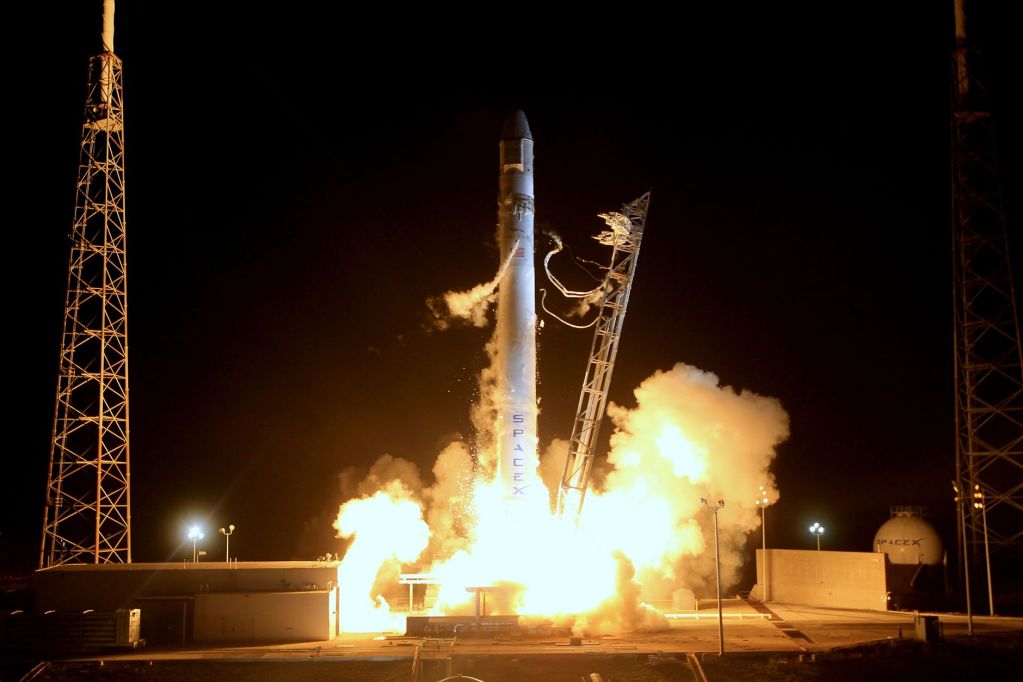
Pakistan has its first astronaut in orbit. China’s Shenzhou-24 spacecraft launched Wednesday morning Beijing time with Pakistani air force pilot Muhammad Zeeshan Ali aboard, and docked with China’s Tiangong space station hours later, making him the first foreign astronaut to visit the station.
The launch came at 8:18 a.m. Beijing time on Wednesday, Nov. 25 (7:18 p.m. Eastern on Tuesday), from the Jiuquan Satellite Launch Center in northwest China on a Long March-2F rocket, Pakistan’s Dawn newspaper reported. The China Manned Space Agency said the capsule docked about 3 hours and 38 minutes after liftoff. Reuters put the docking at 11:56 a.m. Beijing time.
Who is on board
- Tang Hongbo, the Chinese mission commander.
- Wu Yi, the Chinese flight engineer and pilot.
- Muhammad Zeeshan Ali, 40, a Pakistani pilot flying as payload specialist.
Ali is expected to spend about a week in space, far shorter than the usual six-month stay for Chinese crews. Reuters reported he trained for seven months in Beijing, including intensive Chinese-language classes, calligraphy and table tennis. Under a February 2025 agreement between Pakistan’s space agency, SUPARCO, and China’s space agency, two Pakistanis trained in China, with one chosen to fly, Dawn reported. Ali and fellow candidate Khurram Daud began training this spring.
Before launch, Ali told reporters he was flying not for himself but for his country, according to Reuters.
What the crew will do
Dawn reported the crew will run around 90 experiments. Ali’s work includes growing microalgae as a possible source of food and oxygen in space and studying how spaceflight affects quinoa seeds. He will also help with an experiment on self-healing carbon fiber materials designed to repair small cracks in spacecraft, Reuters said.
Meanwhile, Shenzhou-23 commander Zhu Yangzhu will stay aboard for about a year, which would be the longest single stay in orbit by a Chinese astronaut. The rest of the Shenzhou-23 crew is due to return to Earth with Ali.
Celebration in Pakistan
This is not just one astronaut’s journey, but the journey of 240 million Pakistanis.
Pakistani Prime Minister Shehbaz Sharif, on X (via Reuters)
Pakistan’s planning minister, Ahsan Iqbal, wrote that a new era had begun for the country’s space program, and President Asif Ali Zardari said the achievement would inspire young Pakistanis to pursue science, Dawn reported. Pakistan and China have cooperated in space since the early 1990s, and a Pakistani-built rover is set to fly on a Chinese lunar mission around 2028.
Why it matters
The flight is a milestone for China’s effort to make Tiangong, whose name means “Celestial Palace,” a hub for international science. The NASA-led International Space Station may be retired around 2030, which could leave Tiangong as one of the few places for long-term research in orbit. Upstormed News has followed other recent space milestones, including a European-Japanese probe reaching Mercury, and setbacks such as this month’s Vulcan rocket failure.
It also highlights a growing space race. China says its goal of landing people on the moon by 2030 is unchanged, and it plans a lunar research base with Russia by 2035. The United States is aiming for 2028 to return astronauts to the moon. Washington has warned Beijing could try to dominate resource-rich areas of the moon; Beijing rejects that and says it supports peaceful use of space, Reuters reported.
Why it matters for families
A first astronaut is a moment that can spark curiosity in children anywhere. Ali’s experiments with algae and seeds are a simple way to talk with kids about how astronauts might grow food far from Earth, and why science, languages and teamwork all matter. Families can follow along as the crew posts updates and returns home in about a week.
What to watch next
Watch for the start of the experiments, Ali’s return to Earth with the Shenzhou-23 crew in roughly a week, and whether other countries send astronauts to Tiangong. Upstormed News will follow the mission.
Read more: Europe-Japan BepiColombo Probe Reaches Mercury Orbit Despite Software Glitch
If you could send one experiment to a space station, what would you want to test? Tell us in the comments.
Sources: Reuters via Business Recorder, “China’s Shenzhou-24 docks at space station with Pakistani national as first foreign astronaut” (November 25, 2026); Dawn, “‘A new era begins’: Pakistan’s Zeeshan Ali enters new frontier as Shenzhou-24 docks with space station” (November 25, 2026); Outlook India, “Pakistan’s First Astronaut Begins Historic Mission To China’s Tiangong Space Station” (November 25, 2026)



Leave a Reply