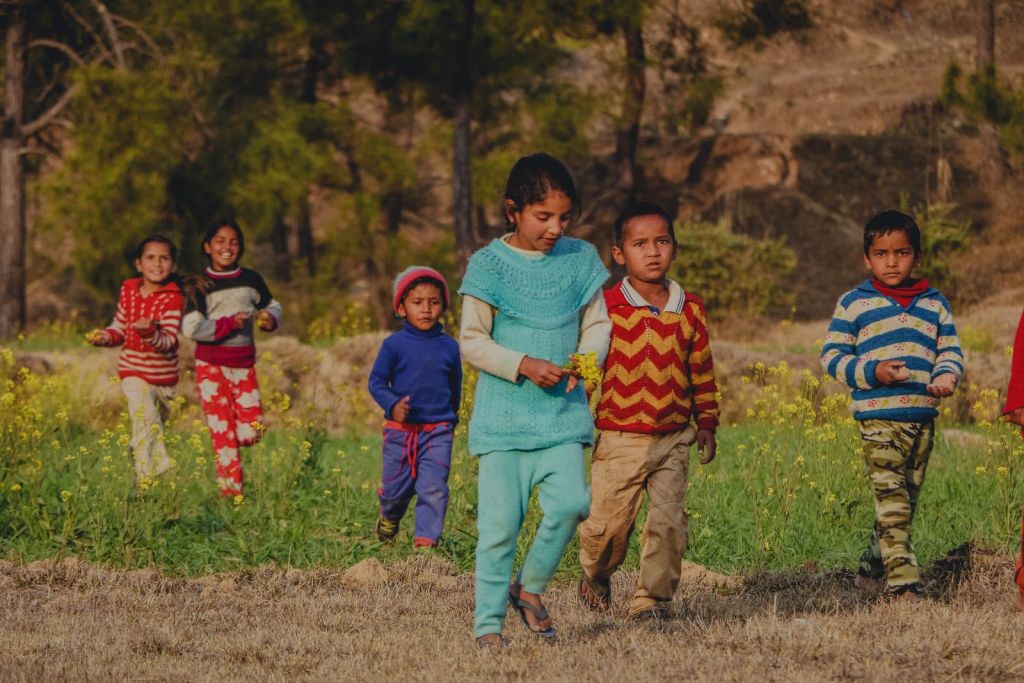
Today, November 20, is World Children’s Day. This year it carries extra meaning: UNICEF, the United Nations agency for children, is marking 80 years since it was founded in 1946.
You may see landmarks glowing blue in photos online today, or hear the day mentioned at school. Here is a simple guide to what the day is about, what has gotten better for children around the world, where the needs are still great, and how families can take part.
What is World Children’s Day?
World Children’s Day falls on the anniversary of two important agreements. In 1959, the UN General Assembly adopted the Declaration of the Rights of the Child. Thirty years later, in 1989, it adopted the Convention on the Rights of the Child, a treaty that UNICEF describes as the most widely ratified human rights treaty in history.
UNICEF calls it a day of action “for children, by children.” The 2026 theme is “My day, my rights, my future.” Children are invited to share what they hope for in the years ahead.
On or around November 20, many schools and famous buildings light up in blue, UNICEF’s color. In past years that has included sites such as the Eiffel Tower in Paris and Chichen Itza in Mexico. In Bulgaria, for example, the national parliament building and the National Palace of Culture are being lit blue this year.
Eighty years of progress
UNICEF was created after the Second World War to help children whose lives had been torn apart. According to UNICEF, the goal was to protect every child, no matter their nationality, religion or circumstances.
Over eight decades, UNICEF says, the world has cut child deaths in half, opened school doors to many more children, and helped protect young people caught in wars and disasters.
Some country-level numbers show what that progress can look like. In The Gambia, a small nation in West Africa, deaths of children under five fell by half between 2000 and 2020, from 112 to 56 for every 1,000 babies born, according to UNICEF Gambia. Routine vaccination there has stayed above 90 percent, and primary school enrollment has reached nearly 94 percent, a record high. A program there has also brought nearly 75,000 children who were out of school back into classrooms.
Behind each of those numbers is a child who lived to blow out birthday candles, or learned to read.
Where the needs are still great
UNICEF is also honest that the work is far from finished. In a November 19 release, its office in Bulgaria shared several sobering global figures:
- Nearly 5 million children under age five still die each year, mostly from causes that could be prevented or treated.
- About 45 million young children are affected by malnutrition.
- Around 412 million children live on less than three dollars a day.
- More than 45 million children were forced from their homes by conflict and violence in 2025.
UNICEF also notes that progress on child survival has slowed for the first time this century. That is a reason for prayer and continued care, not for despair. The same tools that worked before, like vaccines, clean water, good nutrition and schooling, still work today.
As Mioh Nemoto, UNICEF’s representative in Bulgaria, put it: “Eighty years ago, the world made a choice to put children first. Today, we are being asked to make that choice again.”
What families can do
You do not need to be a world leader to honor this day. Here are a few simple ideas:
- Ask your children about their future. Over dinner, ask, “What do you hope the world looks like when you grow up?” Then really listen.
- Talk about kids around the world. Look at a map together and talk about children in another country, what their day might look like, and what they might need.
- Pray together. Pray for children who are hungry, sick or far from home this holiday season.
- Give or serve if you are able. Many trusted charities, churches and local groups help children year-round. Research any group before giving.
- Use the free tools. UNICEF offers a children’s version of the Convention and a parenting toolkit on its World Children’s Day page.
Jesus made room for children when others thought they were a bother. That is still a good example for all of us.
“But when Jesus saw it, he was much displeased, and said unto them, Suffer the little children to come unto me, and forbid them not: for of such is the kingdom of God.”
Mark 10:14 (KJV)
What is one hope you have for the children in your life, or for children around the world?
Sources: UNICEF, “World Children’s Day 2026” (November 2026); UNICEF Bulgaria, “80 years after the founding of UNICEF, children’s rights are still under threat” (November 19, 2026); UNICEF Gambia, “My Day. My Rights. My Future.: A Joint Statement on World Children’s Day 2026” (November 20, 2026); Holy Bible, King James Version, Mark 10:14 (biblehub.com).


Leave a Reply