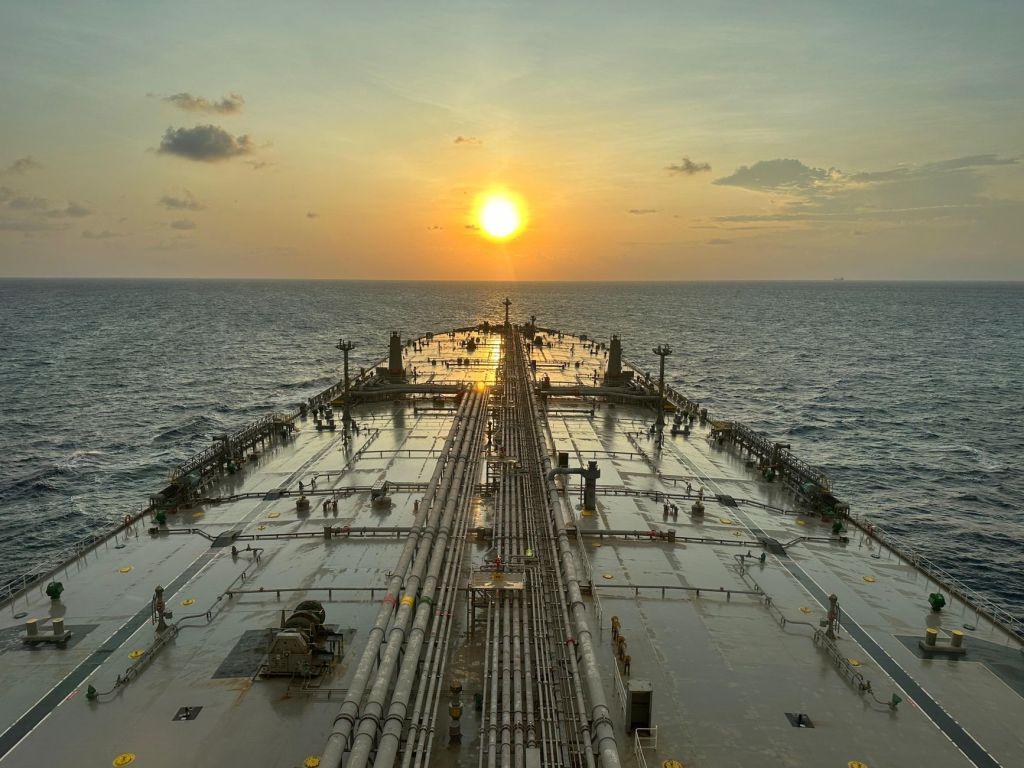
Iran said Monday it will use “every means” to counter the U.S. naval blockade of its ports, a day after President Trump warned that Iranian ships trying to break it would end up at the bottom of the sea. Far from the Gulf, Japan moved to help Asian nations guard against the oil shortages the standoff is causing.
Tehran’s warning
At a weekly briefing, Iranian Foreign Ministry spokesman Esmaeil Baghaei called the blockade military aggression and a violation of the U.N. Charter, according to Euronews. CBS News reported that he cited Article 51 of the charter, which covers self-defense, and said Iran “will certainly not tolerate these actions.”
Senior commanders of Iran’s Revolutionary Guard added that their missile and air capabilities have grown and that any threat would bring a response, Euronews reported. Some Iranian media and Guard-linked figures have called for a convoy of oil tankers to try to break the blockade, but Iranian officials said there is no concrete plan.
Trump’s warning came Sunday when a Fox News reporter asked about such a convoy; he said he hoped Iran would try it, according to Euronews. The same day, he posted that Iran had launched more drones and missiles in the past week than at any time in more than a year, and said all were intercepted without damage, CBS News reported.
Tension at sea
The Strait of Hormuz, the narrow waterway linking the Persian Gulf to world markets, remains at the center of the conflict. Iran has been working to block it, and the U.S. responded with a counterblockade of Iranian ports, followed by economic sanctions and a task force to disrupt land routes into Iran, CBS News reported.
On Sunday, Iranian media said two oil tankers caught fire after entering what Iran’s navy called a restricted area east of the strait, according to Al Jazeera. Britain’s maritime security agency, UKMTO, confirmed at least one incident involving a tanker in the Gulf of Oman with military forces involved, but gave no details, Euronews reported. U.S. Central Command had not commented as of Monday. Upstormed News has tracked the rising attacks around the strait.
Is there a path to talks?
Iran says the strait could reopen quickly if its demands are met. Foreign Minister Abbas Araghchi has said the U.S. blockade must be lifted first. Tehran’s conditions include ending sanctions and the blockade, unfreezing assets and carrying out commitments it says Washington accepted in an earlier memorandum signed in Islamabad, according to CBS News and Euronews.
Trump has called that memorandum a waste of time and declared it void, Euronews reported. Qatar is serving as a key go-between: a Qatari delegation held talks in Tehran on Friday, and Qatar’s prime minister was expected to meet Secretary of State Marco Rubio on Monday. Trump told Fox News on Saturday that he wants a permanent deal to keep Iran from getting a nuclear weapon, CBS reported.
Asia prepares for a longer squeeze
The standoff is being felt hardest in Asia. About a quarter of the world’s seaborne oil trade passed through Hormuz in 2025, and about 80% of those shipments went to Asia, according to International Energy Agency figures cited by Euronews.
At a regional meeting in Manila held alongside the ASEAN summit, Japanese Prime Minister Sanae Takaichi announced a new oil task force with the IEA. It aims to help Asian countries build emergency reserves, plan joint responses to shortages and possibly use empty storage tanks, including at closed refineries, to hold oil for neighbors. Takaichi said Japan wants it to be “an Asian version of the IEA.” Japan also signed a three-year agreement to help the Philippines build its own emergency oil stockpile. Singapore, Indonesia and Malaysia have expressed support for shared storage, according to the Philippine trade secretary.
What to watch next
Key questions this week are whether Iran attempts a tanker convoy, how the U.S. Navy responds and whether Qatar’s mediation produces any opening. Upstormed News will follow the story.
Why it matters for families
Oil that cannot move through Hormuz affects fuel and shipping costs around the world, including at U.S. gas stations, as Upstormed News explained in this morning’s look at Thanksgiving gas prices. Families with relatives serving in the region may also be watching closely. Military family support offices and official command channels are the best places for reliable updates.
Read more: Iran launches third drone attack on Bahrain in a week as tankers burn near Hormuz
Do you think diplomacy through Qatar can reopen the Strait of Hormuz before the new year?
Sources: Euronews, “Iran vows ‘every means’ to counter US blockade after Trump threat” (November 23, 2026); CBS News, “Iran vows to end U.S. naval blockade by ‘all available means’” (November 23, 2026); Al Jazeera, “Hormuz tankers set ablaze; Tehran warns of internal threats” (November 22, 2026); Euronews, “Japan launches Asian oil task force amid Gulf supply disruptions” (November 23, 2026)

Leave a Reply