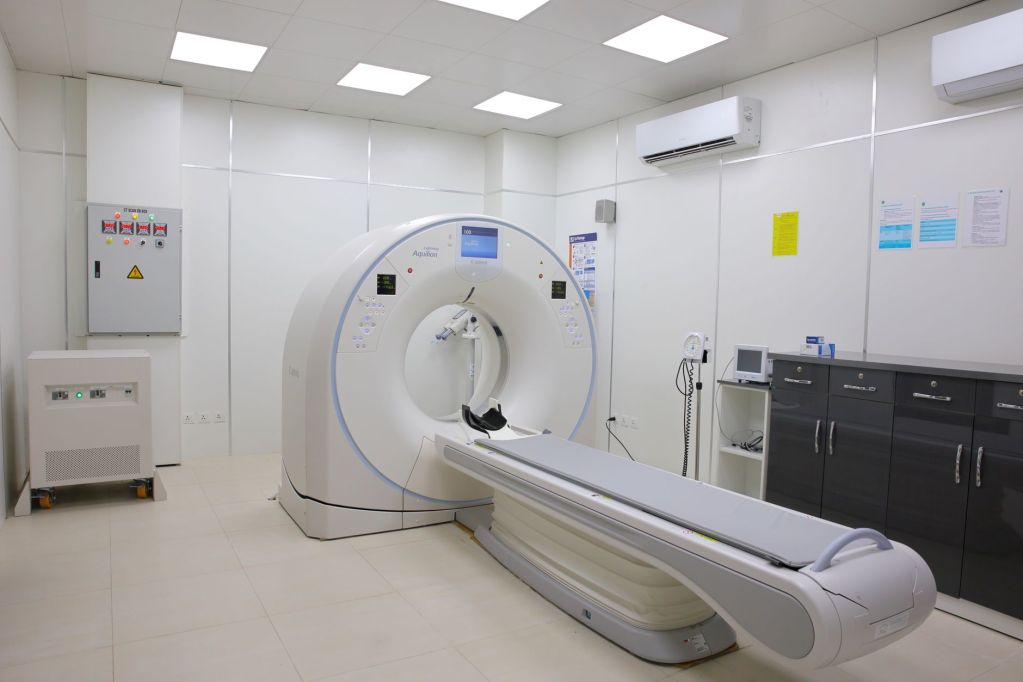
A large new study of more than 3.7 million children suggests that radiation from medical scans, especially head CT scans, is linked to a small but measurable increase in the risk of brain tumors later in childhood and the teen years. The researchers say the scans remain important when a child truly needs one. Their message to parents and doctors is to make sure every scan is necessary and uses as little radiation as possible.
The study, led by researchers at UC Davis Health and UC San Francisco, was published Nov. 19 in JAMA, one of the country’s leading medical journals.
What the researchers found
The team followed children born from 1996 through 2016 in six U.S. health care systems and in Ontario, Canada. On average, each child was followed for about 12 years. Using electronic medical records, the researchers estimated how much radiation each child’s brain received from imaging tests like CT scans and X-rays over time. They then looked at who later developed a brain or nervous system tumor.
- Of the 3.7 million children, 1,536 were diagnosed with a brain tumor. Most of those tumors (82.5%) were classified as aggressive.
- A radiation dose about equal to one head CT was associated with roughly 1.8 times the risk of a brain tumor, according to UC Davis Health.
- In real numbers, that works out to about 8 extra brain tumors for every 10,000 children by age 21, or about one extra tumor for every 1,266 head CT exams.
- The risk went up as the total radiation dose went up, and the link was stronger for aggressive tumors.
- The researchers estimate that about 10% of childhood and teen brain tumors in the study population may be linked to radiation from medical imaging.
Most children in the study never had a head CT. During follow-up, 4.3% had one head CT, 0.9% had two, and 0.4% had three or more.
Small risk, big caution
The authors stress that the overall risk to any single child is still small. This was an observational study, so it shows a link between radiation dose and tumors, not proof that every scan causes harm. Lead author Diana Miglioretti of UC Davis Health said the results do not mean parents should avoid scans their children medically need.
These examinations can be lifesaving.
Diana Miglioretti, lead author, UC Davis Health
Senior author Rebecca Smith-Bindman of UCSF told News-Medical that head CT “is invaluable in the right setting,” such as checking for bleeding after a serious injury. She also said, according to UC Davis Health, that head CT is overused and that its use keeps rising year after year.
The head is the part of the body imaged most often in children, and a head CT gives the brain a much higher dose of radiation than most other imaging tests, MDLinx reported.
The new study builds on earlier work by the same research team. In September 2025, UCSF reported that the group had linked medical imaging radiation to about 1 in 10 childhood blood cancers in a similar group of nearly 4 million children.
Why it matters for families
Bumps, falls and sports injuries are part of growing up, and an emergency room visit can come with the question of whether a child needs a CT scan. The study’s authors and UC Davis Health offer some general guidance for parents:
- Don’t refuse a scan your child’s doctor says is necessary. In emergencies, CT scans can find serious problems quickly and save lives.
- It’s okay to ask questions. Ask whether the scan is needed right now, how it will change your child’s care, and whether it can be done with a lower radiation dose.
- Ask about other options. Some questions can be answered with careful observation or with tests that don’t use ionizing radiation, such as ultrasound or MRI. Your child’s doctor can tell you what fits the situation.
- Know about head-injury guidelines. Doctors use tools such as the PECARN rules, designed to help decide which children with head injuries truly need a CT. Those rules have been validated, according to the researchers.
- Keep a record. UC Davis Health points families to resources such as Image Gently and the FDA’s “My Medical Imaging History” to keep track of a child’s scans over time.
This article is general information, not medical advice. If you have concerns about past or future scans for your child, talk with your child’s doctor or pediatrician.
What to watch next
The researchers say their findings support careful decisions about when to scan and keeping radiation doses as low as possible when imaging is needed. Hospitals and medical groups may look at these results as they review how often children receive head CTs. Upstormed News will follow any new guidance for parents and doctors.
Related coverage
- Flu Climbs Before Thanksgiving: 11 Areas at High Levels, 7 Child Deaths, CDC Says
- Regular Drinking May Weaken Cancer Immunotherapy, UNC Study Suggests
- Georgia Teen ‘Chef Joey’ Cooks His First Thanksgiving After Losing His Mom
Read more: Biscuit Listeria Recalls Grow: Breakfast Sandwiches Pulled in a Dozen States
Has your child ever needed a CT scan, and did you feel comfortable asking questions about it?
Sources: JAMA, “Medical Imaging and Pediatric and Adolescent Brain Tumor Risk” (November 19, 2026); UC Davis Health, “Children exposed to more radiation from medical scans may face higher brain tumor risk” (November 19, 2026); News-Medical, “Higher radiation from childhood imaging may increase brain tumor risk” (November 19, 2026); MDLinx, “Children exposed to higher levels of radiation from medical imaging may face increased risk of brain tumors” (November 19, 2026); UCSF, “Study Assesses Cancers in Children Exposed to Medical Imaging” (September 17, 2025)




Leave a Reply