
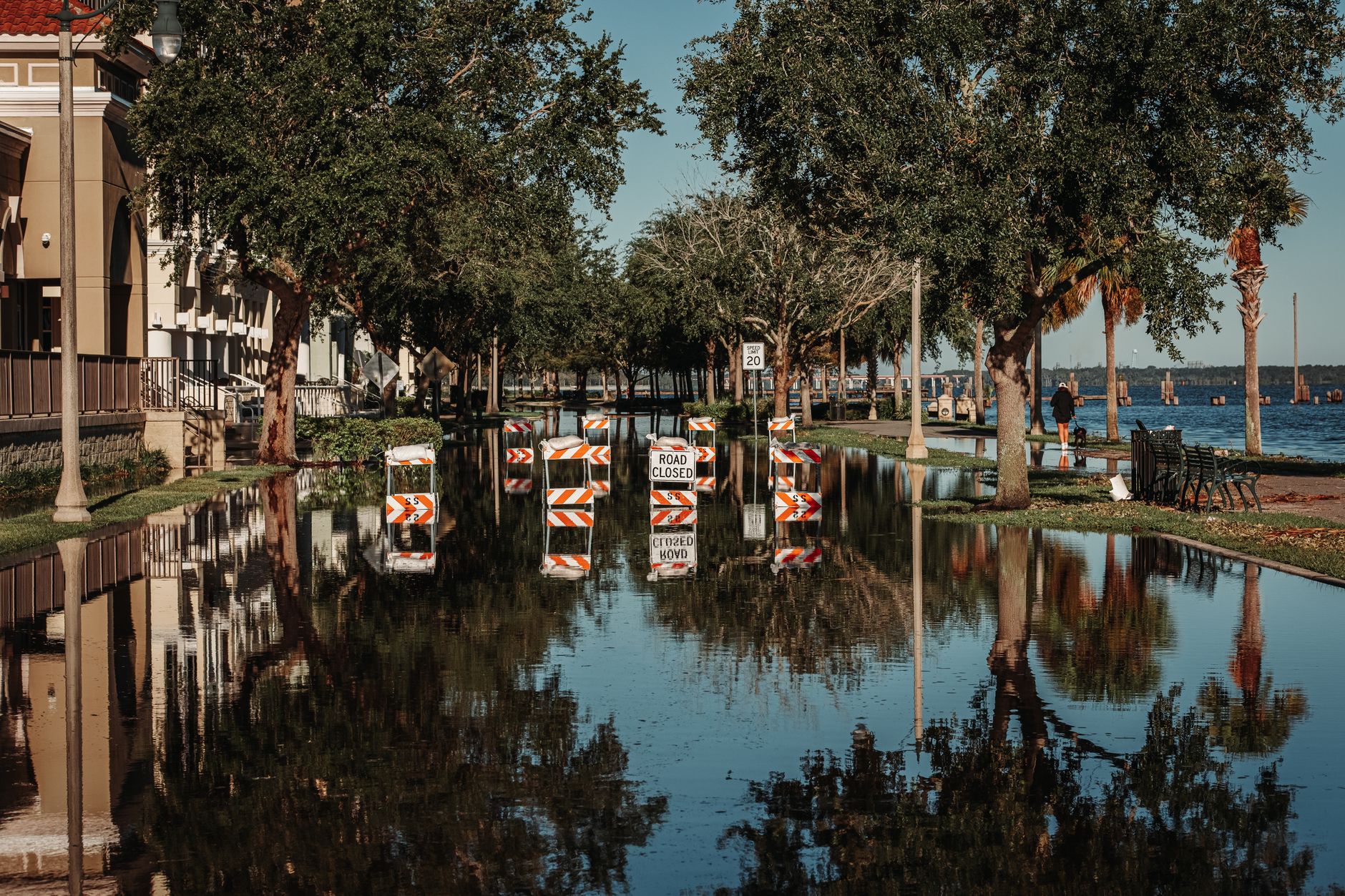
The rain has stopped in Central Florida, but the flooding has not. The St. Johns River, Florida’s longest river, set a new record above Lake Harney on Sunday morning and is still rising in places downstream. Officials are warning that some neighborhoods may stay underwater for weeks.
The Florida Division of Emergency Management said the river above Lake Harney, on the Seminole-Volusia county line, broke its previous flood record on the morning of Nov. 22. Provisional river gauge data reported by Weatherboy showed the Geneva gauge at 12.77 feet at 5:30 a.m. Sunday. That tops the old mark of 12.67 feet, set in October 2022. Major flood stage there is 10 feet.
Farther upstream near Cocoa, in Brevard County, the river has held near 18.7 feet since late last week. The old record there was 17.55 feet, set on Oct. 11, 1953, and it had stood for 73 years. Forecasters expect the Cocoa gauge to stay near 18.8 feet into early this week before it slowly starts to fall.
How it happened
A slow-moving storm system parked over Florida’s east coast last week. CBS News reported that some spots got more than 2 feet of rain in two days. Cape Canaveral recorded 26.9 inches in 48 hours, and Melbourne had its wettest November on record. The Orlando Sentinel, citing the National Weather Service, reported more than 20 inches in three days in the hardest-hit areas.
All that water is now draining into the St. Johns. The river flows north through one of the flattest watersheds in the state, so floodwater can take days or even weeks to move downstream. Near the river’s northern end, around Palatka and Jacksonville, high tides and steady onshore winds are slowing the drainage even more.
This is just an incredible amount of water that will cause the river to continue to rise for the next several days.
Will Ulrich, National Weather Service, Melbourne, to the Associated Press (via Newsweek)
Rescues, closures and a 21-county emergency
Gov. Ron DeSantis expanded Florida’s flood emergency to 21 counties on Nov. 18. The new counties were Broward, Duval, Flagler, Miami-Dade, Monroe, Putnam and St. Johns. The order unlocks emergency funding and lets the state fully mobilize its resources.
Crews in Brevard County carried out more than 100 water rescues, many in Cocoa, and hundreds of rescues have been reported statewide. Daytona Beach police spent nearly 10 hours on Friday pulling people out of waist-deep water. The Florida Fish and Wildlife Conservation Commission sent about 235 officers along with airboats, swamp buggies and shallow-water boats. Brevard County Sheriff Wayne Ivey said earlier in the week that property losses were heavy, but no one had died and injuries were minimal.
Schools in Brevard, Volusia, Indian River, Broward and Miami-Dade counties closed for parts of last week. In Palm Bay, floodwaters partly destroyed the Port Malabar Boulevard Bridge for the second time this month.
Where the water is headed next
The danger is moving north with the river. Volusia County officials warned Sunday night of major to record flooding along parts of the river. Areas of concern include Astor, DeLand, Hontoon Island, Enterprise, Stone Island and Lake Harney Woods. Forecasts call for:
- Sanford: rising from moderate flood toward about 8.2 feet late this week, close to its 8.96-foot record from 2022.
- DeLand: climbing to about 6 feet by midweek, above the 5.3-foot major flood stage.
- Astor: in major flood and still rising slowly. The National Weather Service has said levels there could take weeks or months to drop below flood stage.
Some downstream gauges could stay above flood stage into 2027, according to reporting cited by Latin Times. Volusia County has opened three sandbag sites for river communities and says roads that are open now could become impassable within days.
Why it matters for families
River flooding is different from a hurricane. It arrives slowly and can last a long time, and it can reach homes that never flooded before. Many families along the river are dealing with this during Thanksgiving week, and some have said they do not have flood insurance. If you live in or are traveling through Central or Northeast Florida, officials suggest these steps:
- Never drive through flooded roads or around barricades. Turn around instead.
- Keep supplies such as water, food, medicine and phone chargers on hand in case your road floods.
- Secure outdoor items and know more than one route in and out of your neighborhood.
- Boaters should obey no-wake zones, because wakes push water into homes.
- Follow your county emergency management office and the National Weather Service for updates.
Keep children and pets out of floodwater, which can hide strong currents, sharp debris and contamination. Anyone who gets sick after contact with floodwater should talk with a doctor.
This is a developing story. River forecasts are updated twice a day, and the key question for this week is when the St. Johns finally crests at Sanford, DeLand and Astor. Upstormed News will keep following the flooding and the recovery.
Related coverage
- Pentagon Memo Reportedly Limits U.S.-Canada Military Ties; Ottawa Sees No Change
- Jury Convicts Man of Starting Deadly 2025 Palisades Fire in Los Angeles Retrial
- Storms on Both Coasts Threaten Thanksgiving Week Travel for 81.5 Million
Read more: Your Morning Briefing: Monday, November 23: COP31 Collapse, Sea-Tac Arrests
Has your community been affected by the Florida flooding, or are you helping neighbors recover?
Sources: WFSU News/FPREN, “Record river levels bring prolonged flooding to Florida” (November 22, 2026); Weatherboy, “St. Johns River Sets Record Above Lake Harney in Florida” (November 22, 2026); WKMG News 6 ClickOrlando, “St. Johns River flooding: Volusia County warns of major to record levels” (November 22, 2026); Latin Times, “Florida’s St. Johns River Breaks 73-Year Record as 21 Counties Drown in Flood Emergency” (November 21, 2026); Newsweek, “Florida Flooding Map Shows Worst-Hit Areas As Storms Move North” (November 21, 2026); CBS News, “Record flooding in central Florida prompts hundreds of water rescues” (November 20, 2026)


Leave a Reply