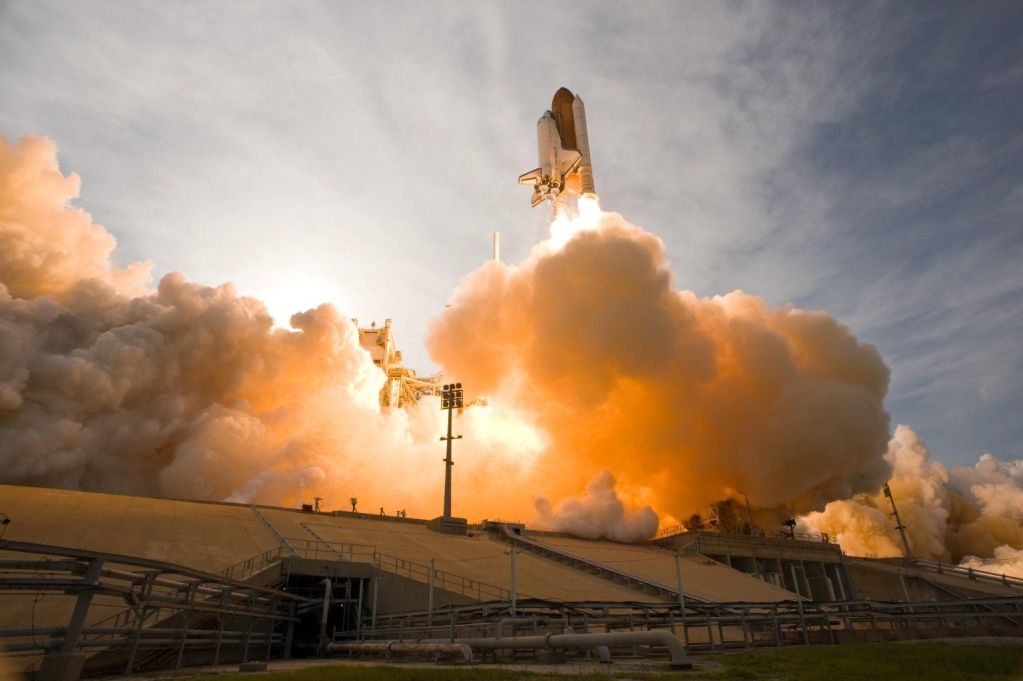
On Nov. 12, 1981, the space shuttle Columbia roared off Launch Pad 39A at NASA’s Kennedy Space Center in Florida at 10:10 a.m. Eastern time. It was not the shuttle’s first trip to orbit. That was the point. Exactly seven months after its maiden flight, the same spacecraft was flying again, and NASA has called Columbia the world’s first reusable orbital spacecraft.
Before the shuttle, every spacecraft that carried astronauts flew once. Mission STS-2 showed that a winged orbiter could launch, land on a runway and be readied to launch again, an idea that changed how people think about getting to space.
Getting Columbia ready again
Turning a spaceship around had never been done, and it was not easy. According to a NASASpaceflight.com history of the mission, Columbia spent 99 days in its processing hangar after its first flight, and more than 1,300 of its heat-shield tiles were replaced. A fuel spill in September forced crews to re-apply roughly 370 more tiles, pushing the launch back.
The first launch attempt on Nov. 4 was scrubbed because of problems with two of the shuttle’s auxiliary power units. On launch morning, Nov. 12, a faulty data-relay unit caused another delay of a few hours, until a replacement part was flown in from Challenger, the next shuttle being built, NASA said.
A birthday in orbit and a shortened mission
The crew was commander Joe Engle and pilot Richard Truly. Launch day happened to be Truly’s 44th birthday, which NASA says made him the first person to fly into space on his birthday. A high school chorus from Forest, Mississippi, recorded a birthday greeting for him. “I couldn’t have had a nicer birthday than this one,” Truly said, according to NASA.
The flight was planned for five days, but about five hours in, one of Columbia’s three fuel cells, which make electricity and water, began acting up, and the crew shut it down. NASA’s flight rules called for a shorter “minimum mission” in that case, so STS-2 was cut to about 54 hours. Even so, the crew completed more than 80% of its planned objectives, NASASpaceflight.com reported.
Firsts that still matter
The short mission packed in a remarkable list of firsts:
- The robot arm’s debut. Truly ran the first in-flight tests of the Canadian-built Remote Manipulator System, a 50-foot arm later known as Canadarm, operating it from the back of the flight deck.
- The first shuttle science payloads. A set of Earth-observing instruments called OSTA-1 became the first science payloads flown on a space shuttle.
- A famous wake-up call. Mission Control woke the crew with a Muppets “Pigs in Space” comedy routine arranged by Sally Ride, who was serving as the first woman capcom, the person who talks directly with astronauts.
- A presidential visit. On Nov. 13, President Ronald Reagan visited Mission Control in Houston, the first sitting president to step onto its floor during an actual mission, NASA said.
Columbia landed on Nov. 14, 1981, on a dry lakebed runway at Edwards Air Force Base in California, with an estimated 200,000 people watching, according to NASA. NASA said Engle described the orbiter as feeling solid during its fiery return through the atmosphere.
Not every lesson was a happy one. After the flight, engineers found erosion on a seal, called an O-ring, in one of the solid rocket boosters, according to NASASpaceflight.com. It was an early warning of the problem that later contributed to the loss of Challenger in 1986, a reminder of how carefully space teams must listen to the clues their machines give them.
Why it matters for families
- Reuse changed the space business. The idea Columbia proved, that a spacecraft can fly, land and fly again, is at the heart of how many missions are planned today, including the commercial partnerships behind NASA’s new Moon delivery plans.
- Problems can be solved. Delays, a fuel spill and a failed fuel cell did not stop the mission from proving its main point. It is a good story to share with kids about persistence.
- Look up together. Families who enjoy space history can keep exploring with our guides to Voyager’s light-day milestone and this month’s Leonid meteor shower.
Forty-five years later, STS-2 is easy to overlook next to the first shuttle launch. But a first flight shows that something can work. A second flight shows that it can work again, and that is how ideas become everyday tools.
Read more: On This Day, Nov. 9, 1989: The Berlin Wall Falls
Do you remember watching the space shuttle launch, or which space milestone would you most like to see in your lifetime? Share your thoughts in the comments.
Sources: NASA, “40 Years Ago: Columbia Returns to Space on the STS-2 Mission” (November 2021); NASASpaceflight.com, “40 years after STS-2: Columbia’s second flight and the path to reusability” (November 2021)


Leave a Reply